
















AUSTRALIA: International travellers to be slugged another AU$10 to leave
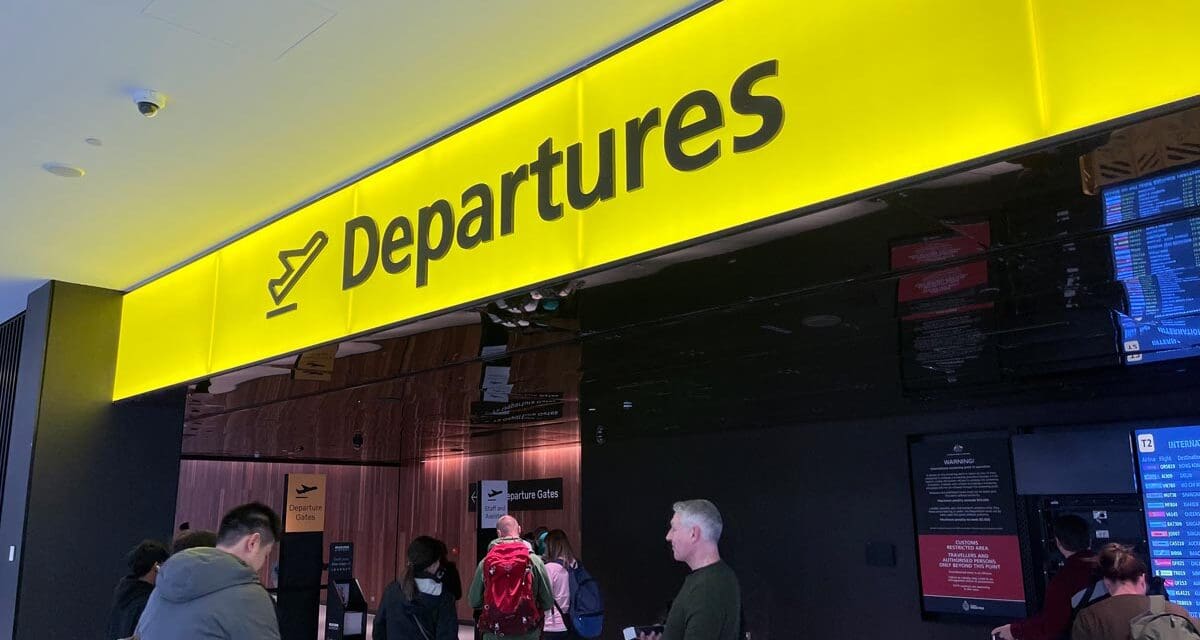
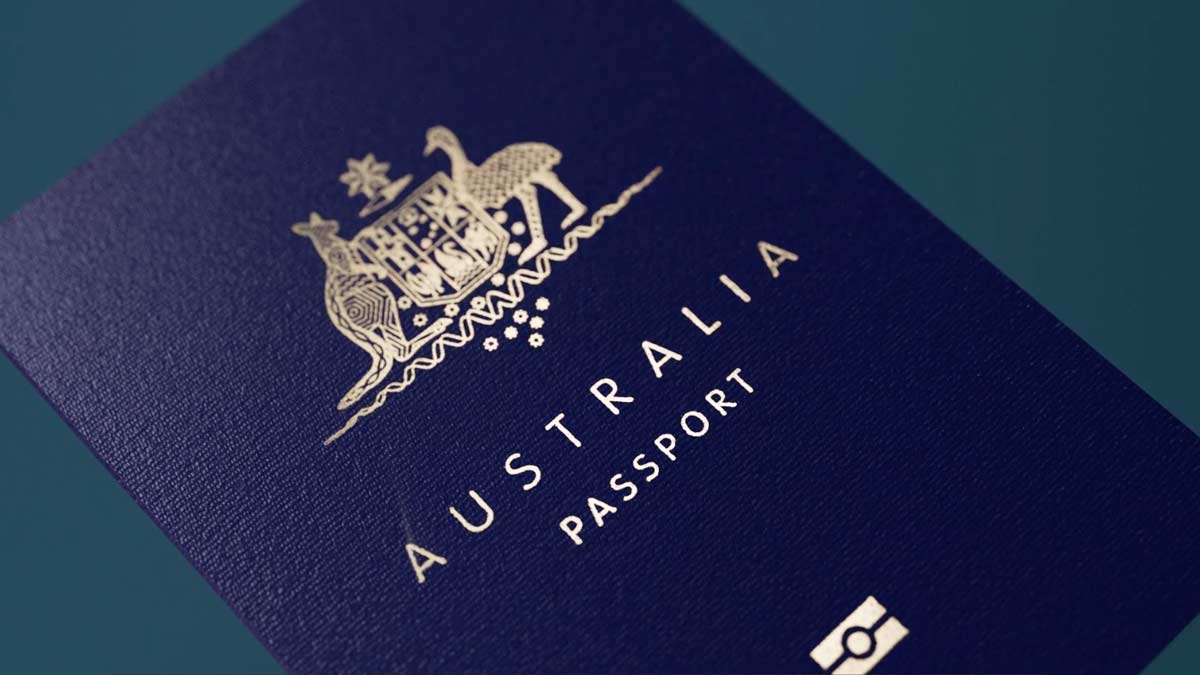
Australian international travellers will pay more to leave the country from 1 January 2027. The Federal Budget confirms the Passenger Movement Charge (PMC) will rise by AU$10 from AU$70 to AU$80.
This is a Commonwealth charge applied to most passengers departing Australia by air or sea. Airlines collect it through your ticket price, so you will probably never see it itemised.
The increase was confirmed in the 2026 Federal Budget. The government expects the higher charge to raise hundreds of millions in additional revenue. Industry reports put the expected take at around $755 million over five years.
Another cost
The airline and tourism industries are not thrilled. Their argument is simple: international airfares are already under pressure from high fuel prices, supply chain issues, constrained aircraft availability, airport charges and government fees.
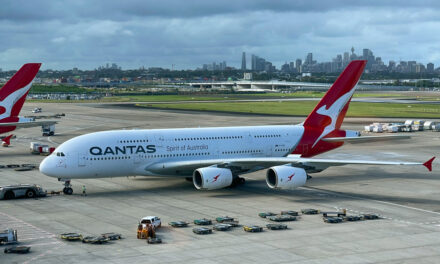
Qantas has warned its fuel bill could rise by up to $800 million this financial year, while Virgin Australia has already lifted domestic fares by 5 per cent in response to higher fuel and other charges. Both airlines have also complained that government fees and charges are rising faster than the consumer price index.
Where does the money go?
The PMC is often presented as a border-processing charge, but more than half of the revenue currently goes into consolidated revenue rather than being directly reinvested in border services, according to industry criticism cited in the AFR.
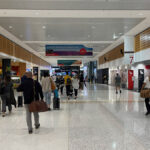
Airports and tourism bodies want the government to use PMC revenue to modernise arrivals and departures: scrap the paper incoming passenger card, add more SmartGates, and upgrade border technology. That would help reduce the mystified, dispiriting queues that greet you at border control after a long-haul flight.
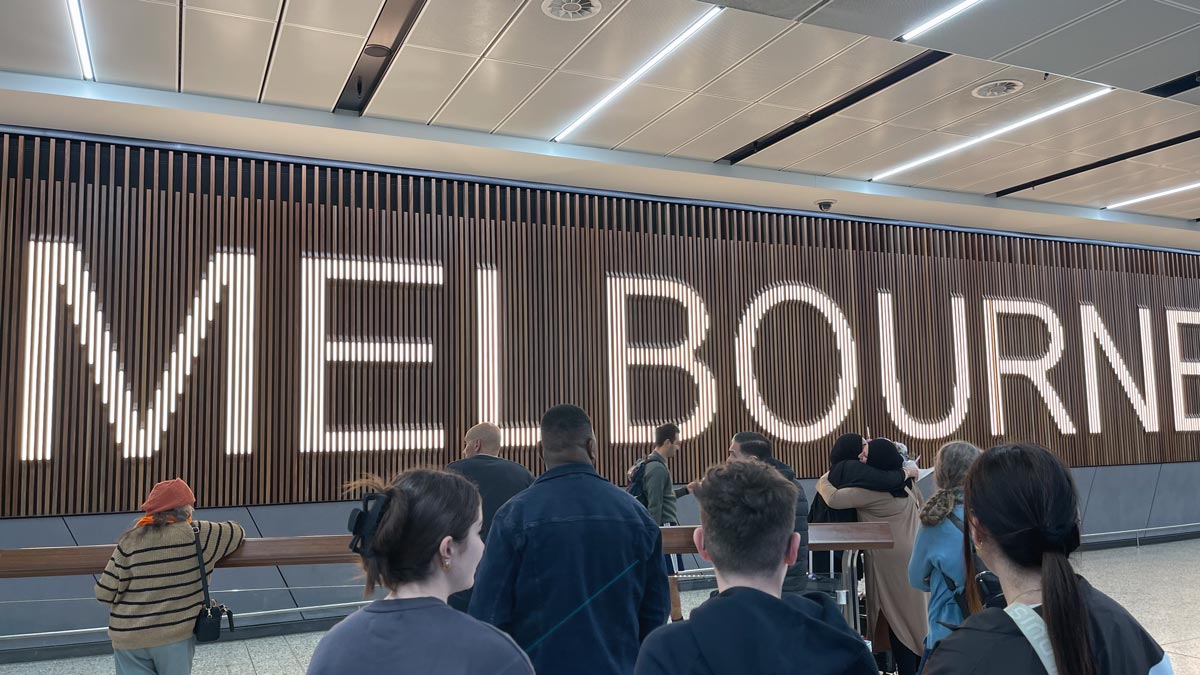
Melbourne Airport is a particularly neat example. Inbound passenger numbers have surged by roughly 50% over the past decade. The number of passenger kiosks for arrivals has remained stuck at 17.
Sustainable aviation fuel gets a nudge
There was one aviation-adjacent sweetener in the Budget. The government has separately announced a major fuel security package, including a AU$3.2 billion government-controlled Australian Fuel Security Reserve holding around one billion litres of diesel and jet fuel. The aim is to lift Australia’s diesel and jet fuel reserves to 50 days.
The Budget is also expected to help create a stronger demand signal for sustainable aviation fuel, or SAF. That could come through mechanisms such as usage mandates or changes allowing the Australian Defence Force to enter long-term SAF supply contracts.
That matters because Australia has plenty of potential feedstocks — including agricultural waste, canola, tallow and used cooking oil — but has been slow to build a serious domestic SAF industry. Qantas and Airbus have already backed a range of Australian projects.
Good, in theory. But SAF is not going to make your fare cheaper next January.
2PAXfly takeout
The government has to find income somewhere, and let’s face it, you have to earn a reasonable amount to afford international travel. Another AU$10 won’t break anyone’s travel bank.
I don’t have a problem with this. What I do have a problem with is the chaos you find when re-entering Australia. It’s ridiculous that you need to double-queue at one machine, answer questions to get that little ticket to place in your passport. It joins that customs entry card that you had to scrabble to find a pen on the plane to fill in. Then you need to juggle all three along with your luggage to finally get to the arrivals hall after passport and customs control.
How come that when I enter the United Kingdom, all I need to do is complete an online ETA a few days before and then put my Australian passport on a reader, and be let through the gates?










What did you say?