








AIR NEW ZEALAND: B777s are getting new business class suites, better than on new Dreamliners
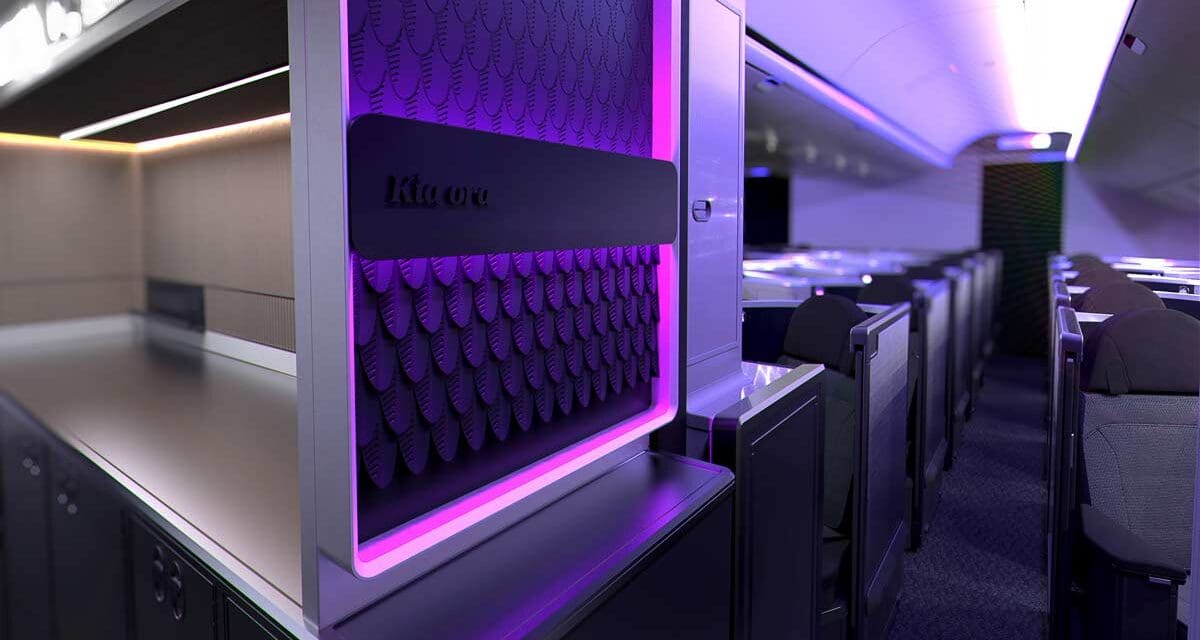
Air New Zealand has revealed the replacement for the ageing Business Premier seats on its Boeing 777-300ERs. These older aircraft may end up with an off-the-shelf business class seat that many travellers will prefer to the bespoke product installed on its newer Boeing 787-9 Dreamliners.
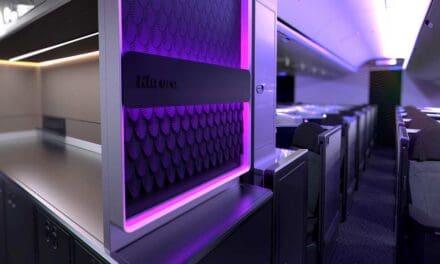
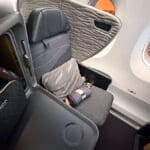
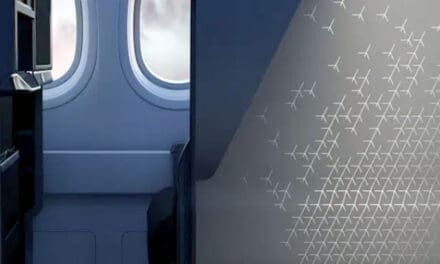
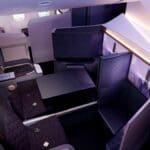
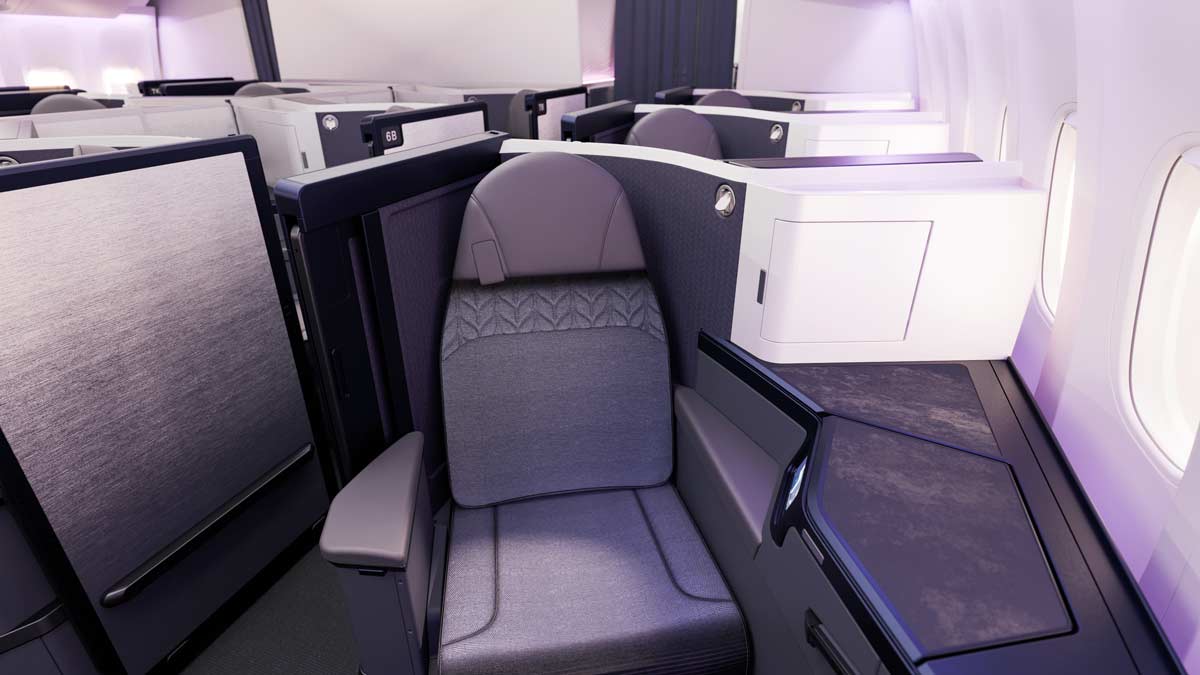
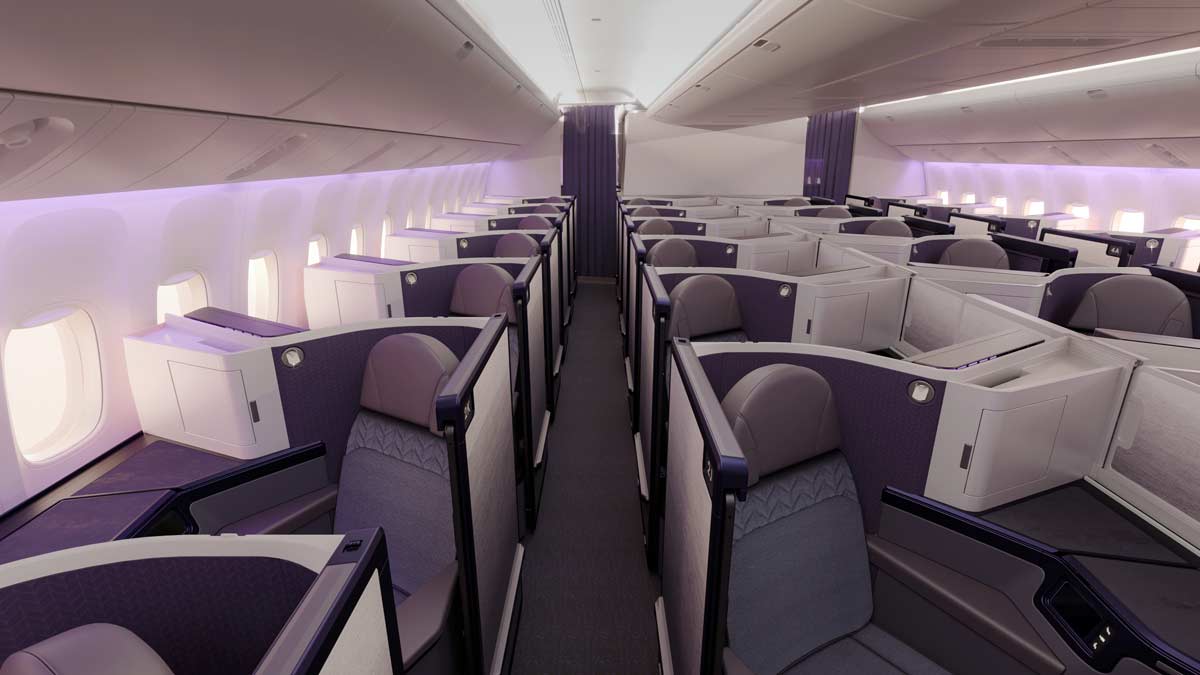
From 2027, Air New Zealand’s seven long-term Boeing 777-300ERs (not the ex-Cathay frames they have) will receive the Collins Aerospace Elevation Business Class suite with a sliding door. It is a reverse-herringbone seat, with every passenger facing a window or centre of the aircraft rather than staring across the aisle at another passenger.
I have long avoided travelling on Air New Zealand’s current 777 Business Premier cabin. The 20-year-old herringbone layout has passengers facing one another across the aisle, with about the least privacy you can have in a Business Class cabin.
The first 777 is scheduled to enter the retrofit programme in March 2027 and return to service in May.
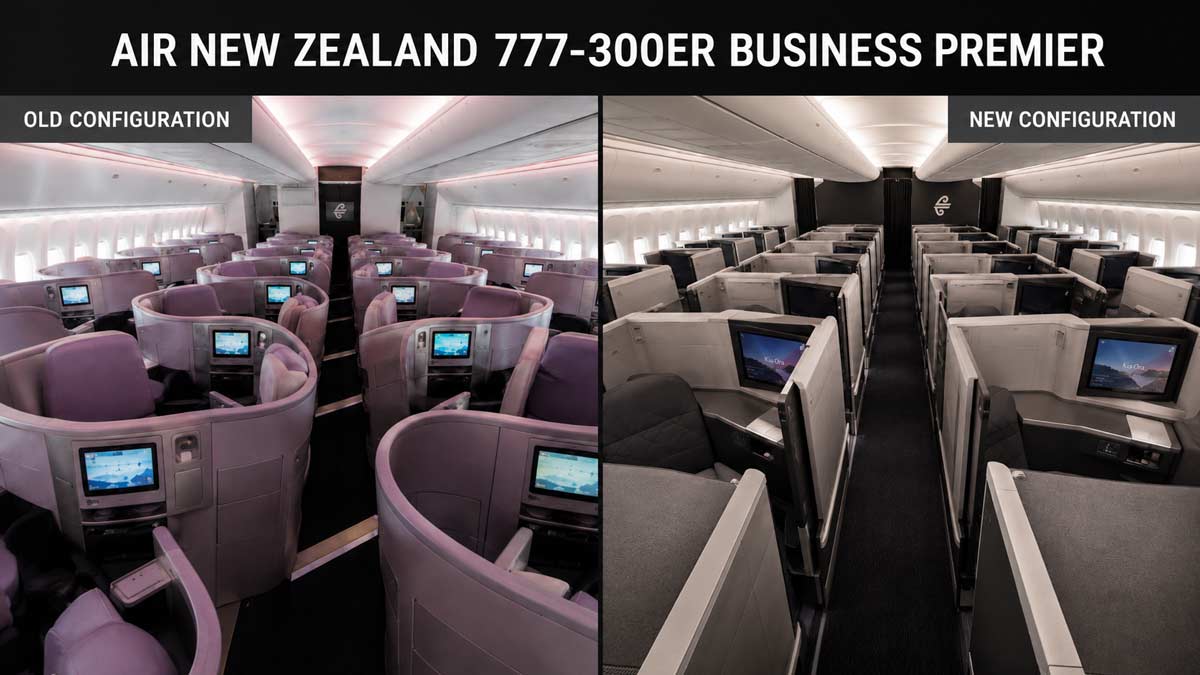
The 777 keeps 44 business class seats
Importantly, Air New Zealand is not using the retrofit to cram more passengers aboard its 777s.
The aircraft will remain at 342 seats overall. Business Premier stays at 44 seats, but with the new proper herringbone Collins Elevation suites.
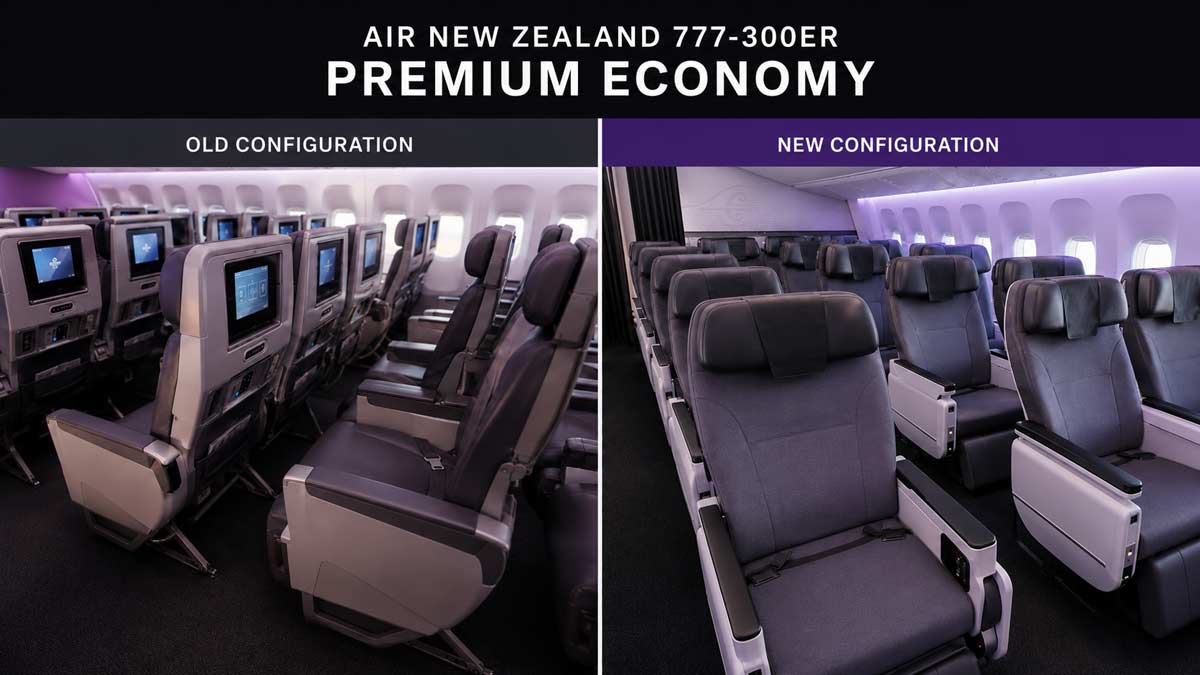
The small capacity adjustment happens further back. Premium Economy loses two seats, dropping from 54 to 52, while Economy gains two, increasing from 244 to 246.
| Air New Zealand 777-300ER | Current | After retrofit |
|---|---|---|
| Business Premier | 44 | 44 |
| Premium Economy | 54 | 52 |
| Economy | 244 | 246 |
| Total | 342 | 342 |
The new Business Premier suites will have a 43-inch seat pitch, direct aisle access, privacy doors, centre-seat dividers, an 18-inch entertainment screen with Bluetooth and USB-A and USB-C charging.
A familiar but still good seat
Air New Zealand has long preferred to develop distinctive seating rather than simply buy off-the-shelf. From its original herringbone Business Premier seat to the Economy Skycouch, Skynest, and the latest 787 business-class product Air NZ has prided itself on innovation.
That approach has helped build a strong design identity, but bespoke seats also add cost, complexity, and certification risk. Choosing the proven Collins Aerospace Elevation suite for the 777 marks a more pragmatic turn. Ironically, the less adventurous option may end up being the more widely liked business class seat.
The Collins Elevation platform is already flying as British Airways’ Club Suite and with Malaysia Airlines.
The 787 gets a very different cabin strategy
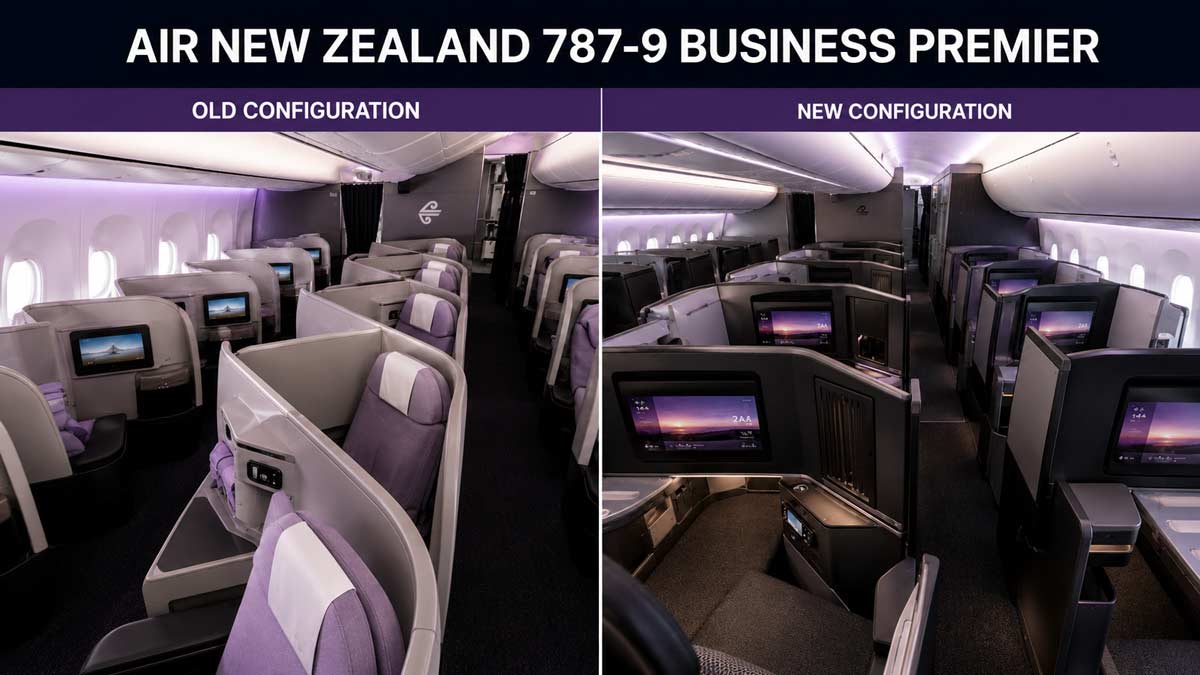
Air New Zealand’s refurbished Boeing 787-9s use the bespoke Safran Visa seat. The standard Business Premier seat has a much larger 24-inch entertainment screen, wireless charging and more storage, but only a partial privacy screen.
The full closing door is reserved for Business Premier Luxe, the larger front-row suites available for an additional charge.
The 787 fleet is also more complicated than the 777 because Air New Zealand operates different cabin configurations.
Cabin layout
Before refurbishment, the lower-premium 787 layout had 18 Business Premier seats, 21 Premium Economy seats, and 263 Economy seats, for a total of 302 passengers. The other existing configuration carries 27 in Business Premier, 33 in Premium Economy, and 215 in Economy, for a total of 275 passengers.
The new cabin layouts are substantially more premium-heavy.
The new V3 configuration has 8 Business Premier Luxe seats plus 34 standard Business Premier seats, for a total of 42 business-class seats. Behind them are 52 Premium Economy and just 125 Economy seats.
The V4 layout has four Luxe suites and 22 standard Business Premier seats, for 26 Business Class seats overall, followed by 33 Premium Economy and 213 Economy seats. Here’s a table to make all that easier to compare:
| Air New Zealand 787-9 | Business class* | Premium Economy | Economy | Total seats |
|---|---|---|---|---|
| Legacy configuration 1 | 18 | 21 | 263 | 302 |
| Legacy configuration 2 | 27 | 33 | 215 | 275 |
| New V3 | 42 | 52 | 125 | 219 |
| New V4 | 26 | 33 | 213 | 272 |
*New 787 totals include Business Premier Luxe.
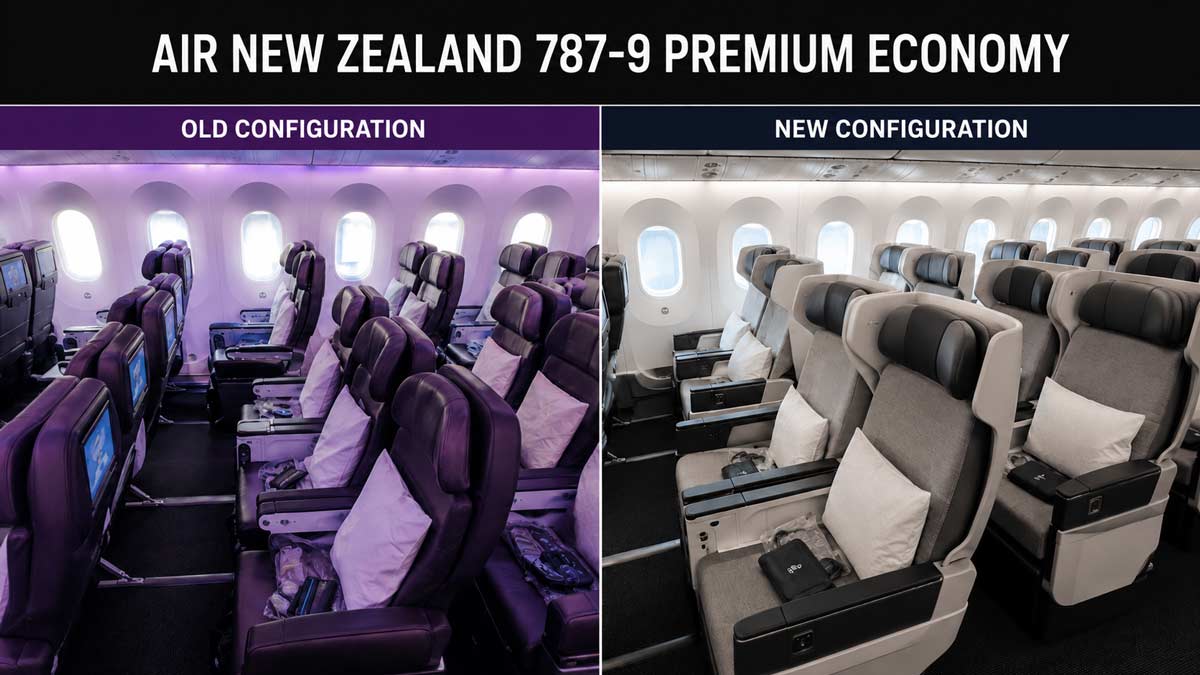
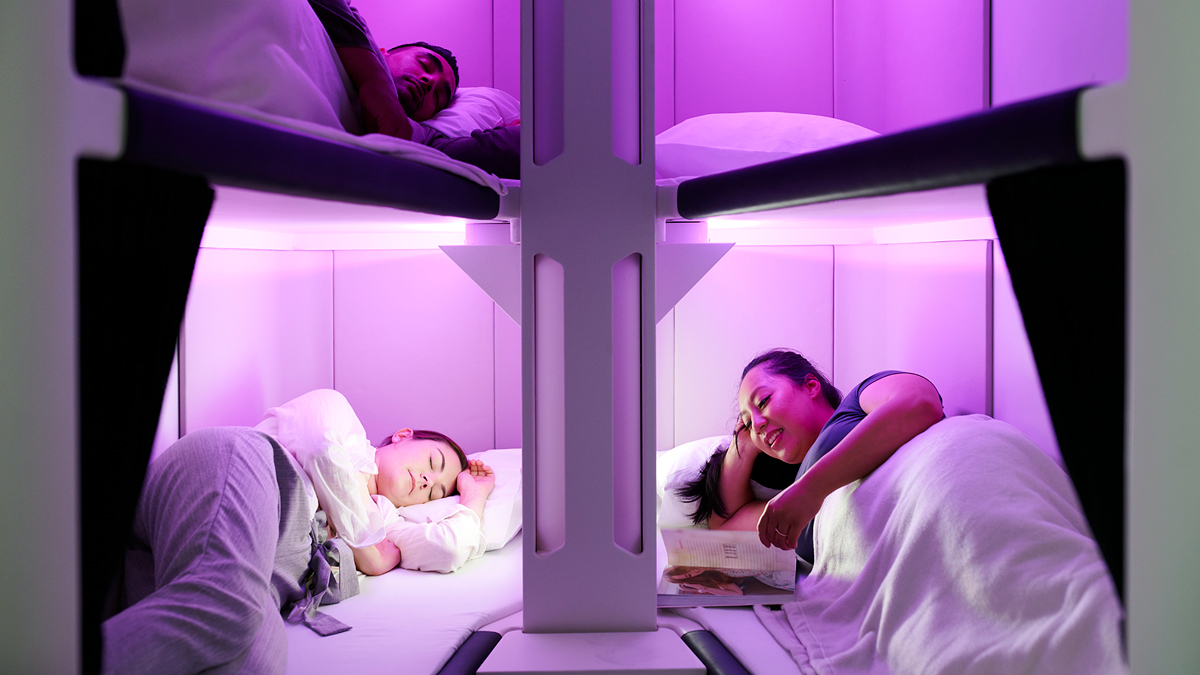
Air New Zealand also has a V5 configuration for new-build Dreamliners. It mirrors the premium-heavy V3 cabin with eight Luxe and 34 standard Business Premier seats, 52 Premium Economy seats and 120 Economy seats, while also making room for the six-berth Skynest.
The numbers show just how differently Air New Zealand is treating the two aircraft types. The 777 upgrade is essentially a seat-for-seat modernisation. The 787 programme is also a major exercise in reshaping the cabin around premium demand.
So which aircraft will have the better business class?
On paper, the 787 wins on technology. Its 24-inch screen is significantly larger than the 777’s 18-inch monitor, and the Dreamliner adds wireless charging.
The 787 also offers Business Premier Luxe, with a larger suite, closing door and room for companion dining.
But the 777 counters with what many travellers may value more: a conventional reverse-herringbone layout and a proper privacy door at every business class seat.
There is also a certain democracy to the 777 cabin. Every Business Premier passenger gets the same basic suite rather than privacy being reserved for those who pay extra for one of a handful of Luxe seats.
Consistency of product across an airline’s fleet is considered advantageous by airline bureaucrats and passengers alike. For passengers, it means they know what they are getting without having to check exactly which aircraft they are travelling on, and which configuration via the seat map. For airlines, it makes sense to reduce the number of products they have to service, thereby reducing maintenance and replacement costs.
That’s what makes this a strange decision in many respects. Why consciously adopt two very different products on your two most important aircraft types for international long-haul?
I suspect the answer is certification. The bespoke product Air New Zealand is installing on its 787-9s would have to be re-certified for the B777S. And recertification can take a lot of time. Just ask Lufthansa. In fact, Air New Zealand only has to look at its recent experience with that Safran seat on the Dreamliner.
Seats and certification issues
| Airline | Aircraft / product | Certification Problem |
|---|---|---|
| Lufthansa | 787-9 Allegris Business Class | The standout example. New 787s entered service in October 2025 with most business seats blocked because they lacked certification. Approval for 25 of 28 seats finally arrived in March 2026. |
| Delta Air Lines | A321neo with Safran VUE lie-flat Delta One suites | Certification and production delays forced Delta to use a temporary aircraft configuration with 44 conventional First Class seats instead. |
| Singapore Airlines | New A350 First and Business Class | The retrofit launch slipped from Q2 2026 to Q1 2027 because of supply-chain problems and certification issues affecting one of the new seat types. SIA has not publicly identified which seat. |
| United Airlines | New 787 Polaris suites | The new suites entered service while the sliding doors were still awaiting certification, requiring the doors to remain locked open. |
| Air India | New 787-9 business class and widebody retrofit programme | Some cabin features, including elements of the new business suites and their doors, have faced certification restrictions. Separately, seat supply problems across several suppliers have pushed the broader retrofit programme back by one to two years. |
| Air New Zealand | Safran Visa Business Premier on the 787-9 | The product was still in pre-certification in 2022 and appeared later than the airline’s original 2024 timetable, eventually entering service in 2025. However, Air New Zealand has not publicly attributed the entire delay specifically to certification. |
2PAXfly Takeout
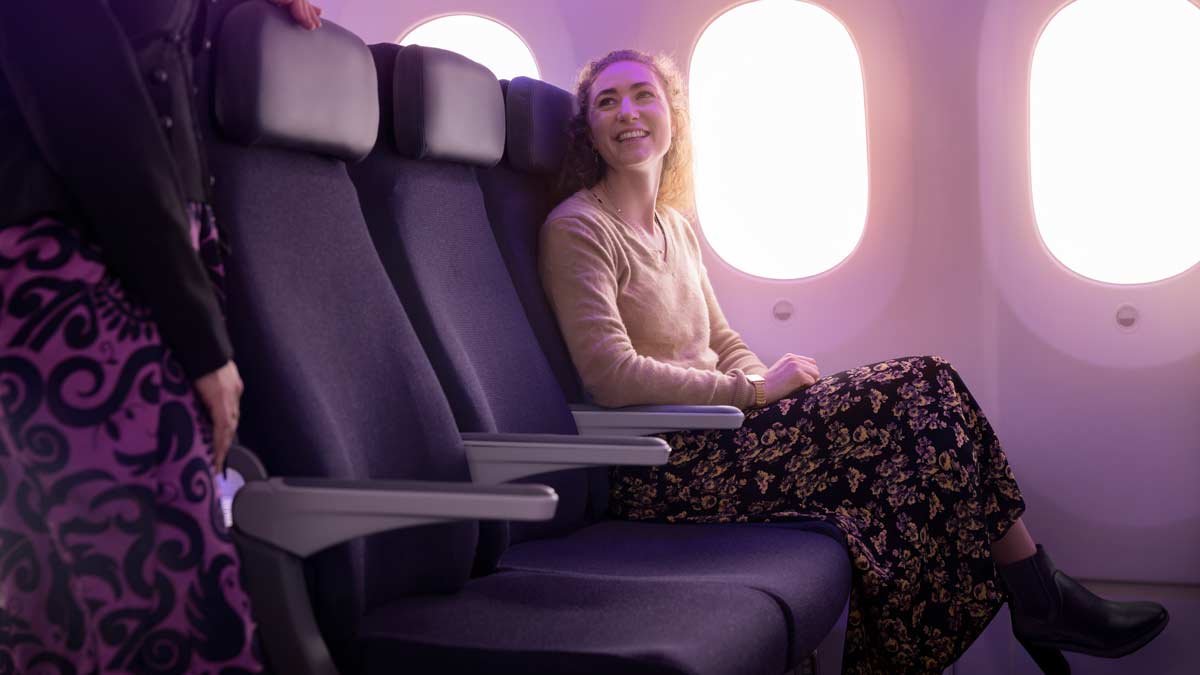
Air New Zealand says the two products will deliver a more consistent experience across its international fleet. Functionally, that is probably true. Both offer direct aisle access, flat beds, modern entertainment and vastly more privacy than the seats they replace.
However, the 787 has a larger screen, wireless charging, and the option to pay extra for a larger Luxe suite. Its new configurations also show just how aggressively Air New Zealand is shifting some Dreamliners towards premium passengers.
The 777 gets something simpler: 44 proper reverse-herringbone suites with a door, replacing 44 increasingly antiquated herringbone seats without reducing the aircraft’s total capacity.
Unfortunately, sometimes off-the-shelf beats trying to be clever.
Either way, these new configurations could have me enjoying the usually wonderful service on Air New Zealand again.






What did you say?