















BORDER FORCE: Melbourne Airport pilots digital Australia Travel Declaration form with Qantas
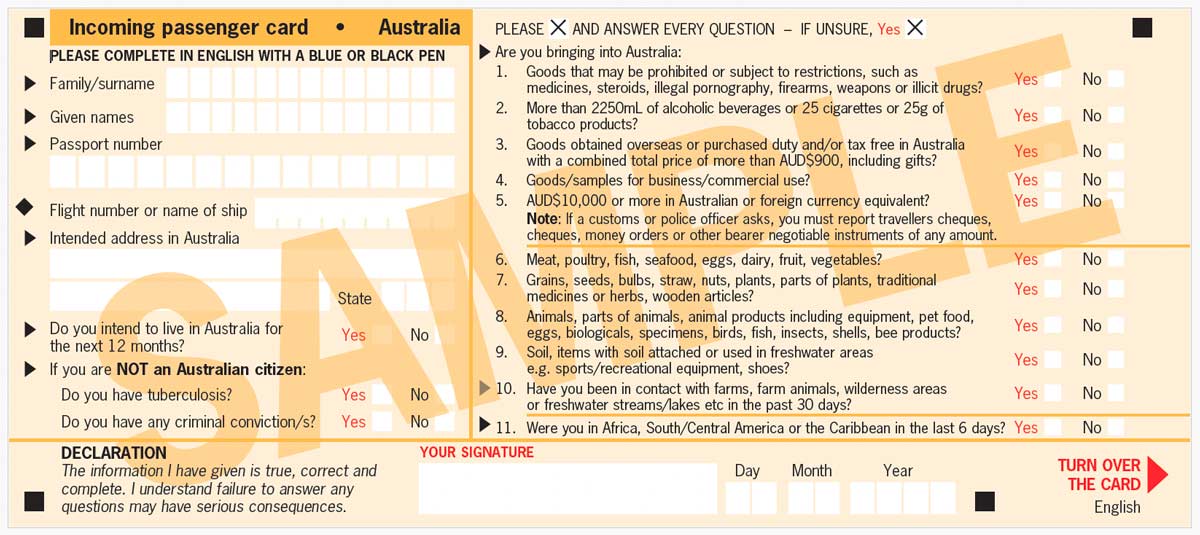
Why is it so difficult for Australia to digitise its Travel Declaration card? I certainly don’t know. But apparently, given this is at least the third try, it is.
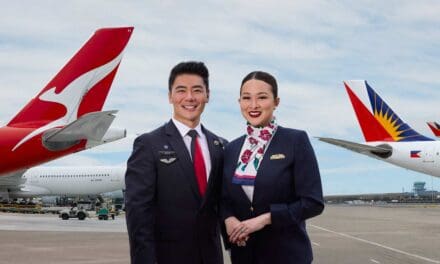
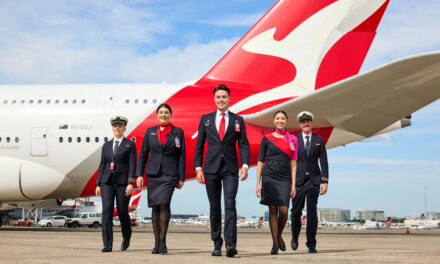
The Australian Border Force is piloting (again) the Australia Travel Declaration (ATD) form, you know that yellow form we all have to fill out before entering Australia, in partnership with Qantas at Melbourne Airport.
The trial requires users to be eligible by having the Qantas app, being able to complete the form in English, and being eligible to use kiosks and Smargates – so an E-Passport – at the border.
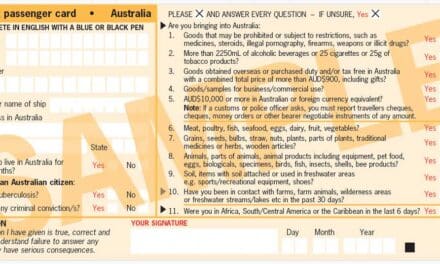
Passenger cards remain a legal requirement under the Migration Act and Migration Regulations. The Melbourne Airport’s own arrivals guidance still tells most passengers to expect the paper Incoming Passenger Card and to declare restricted goods, duty-free over AUD$900, cash of AUD$10,000 or more, medicines, food, plant and animal products.
Qantas says Melbourne joins Brisbane and Sydney in the ATD pilot, with more than 380,000 digital declarations submitted through its app since launch.
Melbourne joins the slow death of the incoming passenger card
That faintly ridiculous orange Incoming Passenger Card. You know, the one you fill in during turbulence, borrowing a pen that barely works. It’s taken a step towards the recycling bin.
Melbourne Airport has now joined Brisbane and Sydney in the Australia Travel Declaration pilot, giving some arriving international passengers the option of completing their arrival declaration digitally before they land.
Before you break out the champagne, this is still a very limited trial. At launch in Melbourne, the digital declaration is available only to passengers arriving on selected Qantas flights: QF154 from Auckland and QF178 from Queenstown. More Qantas international arrivals into Melbourne are expected to be added progressively, but for now, almost everyone else will still be doing the in-flight paperwork shuffle.
The Australia Travel Declaration
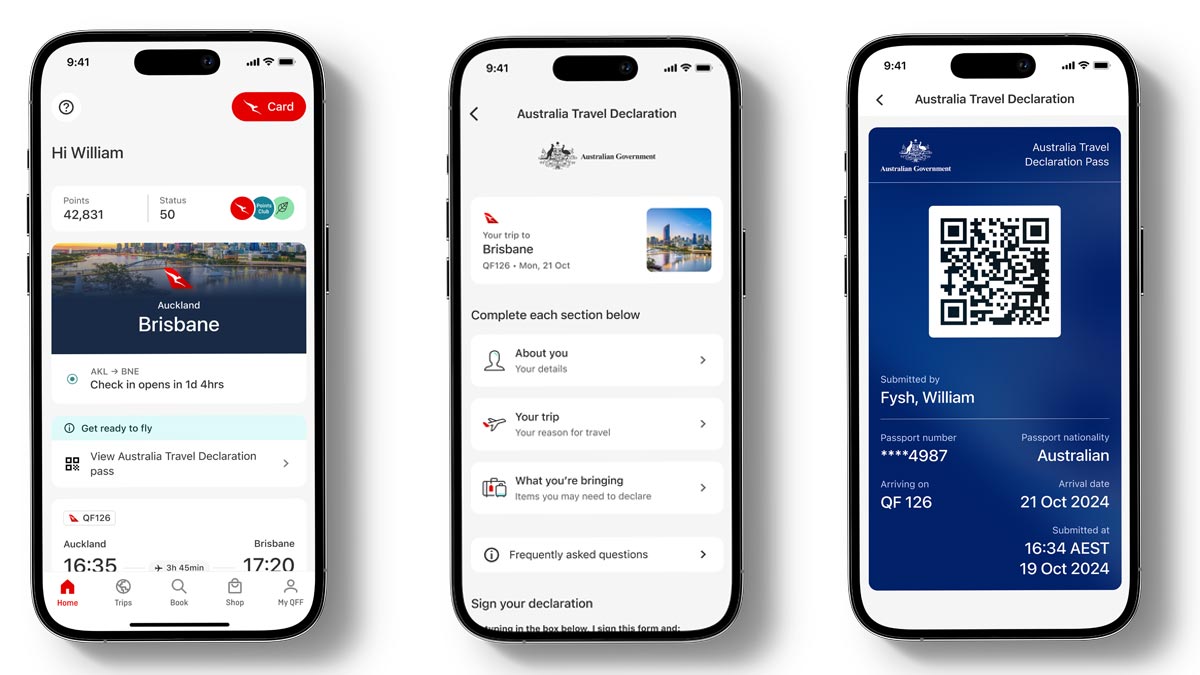
The Australia Travel Declaration, or ATD, is the federal government’s latest attempt to replace the paper Incoming Passenger Card with a digital alternative.
The Australian Border Force and the Department of Agriculture, Fisheries and Forestry are running the pilot with Qantas. For eligible passengers, the ATD is available in the Qantas app and can be completed up to 72 hours before departure to Australia.
Once submitted, travellers receive a digital declaration pass with a QR code. This is available in the Qantas app and sent by email. On arrival, that pass can be scanned by Border Force officers. It can be anywhere, including around the baggage carousel or at the final customs and biosecurity exit point.
This remains a pilot, not a universal system. If you are not invited to use the ATD, can’t access the app, are not eligible for SmartGate processing, or prefer the paper version, you will use the standard Incoming Passenger Card.

Limited to Qantas
The ATD is not yet a full replacement for every arriving passenger. Families, non-English speakers, travellers needing assistance, and passengers arriving on other airlines will find themselves very much in orange-card territory.
The paper card still valid
The Incoming Passenger Card remains a legal document used to identify passengers and record entry into Australia.
It is also where travellers declare goods that may be restricted, prohibited or taxable. That includes medicines, weapons, illegal substances, tobacco and alcohol above duty-free limits, goods purchased overseas or duty-free items valued over AUD$900, cash of AUD$10,000 or more, and the usual biosecurity suspects: meat, seafood, eggs, dairy, fruit, vegetables, seeds, nuts, plants, herbal medicines, wooden items and anything that looks like it has had a meaningful relationship with soil.
Australia’s biosecurity rules are strict, and Border Force’s long-standing advice remains simple: if in doubt, declare it. A few minutes of questioning beats a fine and a starring role in one of those airport border-control television shows.
A path to avoiding pain points
Melbourne Airport has been blunt that international arrivals are one of its biggest passenger pain points. Anyone who has arrived at Tullamarine after a long-haul flight, queued for passport control, waited for bags, and then joined another line for customs will understand the problem without needing a consultant’s slide deck.
The digital card will not magically fix all of that. It does not unload bags faster. Nor staff border desks, or make the person in front of you remember which pocket holds their passport. But it does remove one old-fashioned bottleneck: filling in a paper form mid-flight and presenting it later to an officer.
The ATD should also help Australian authorities triage passengers more efficiently, particularly regarding customs and biosecurity declarations.
Third time lucky?
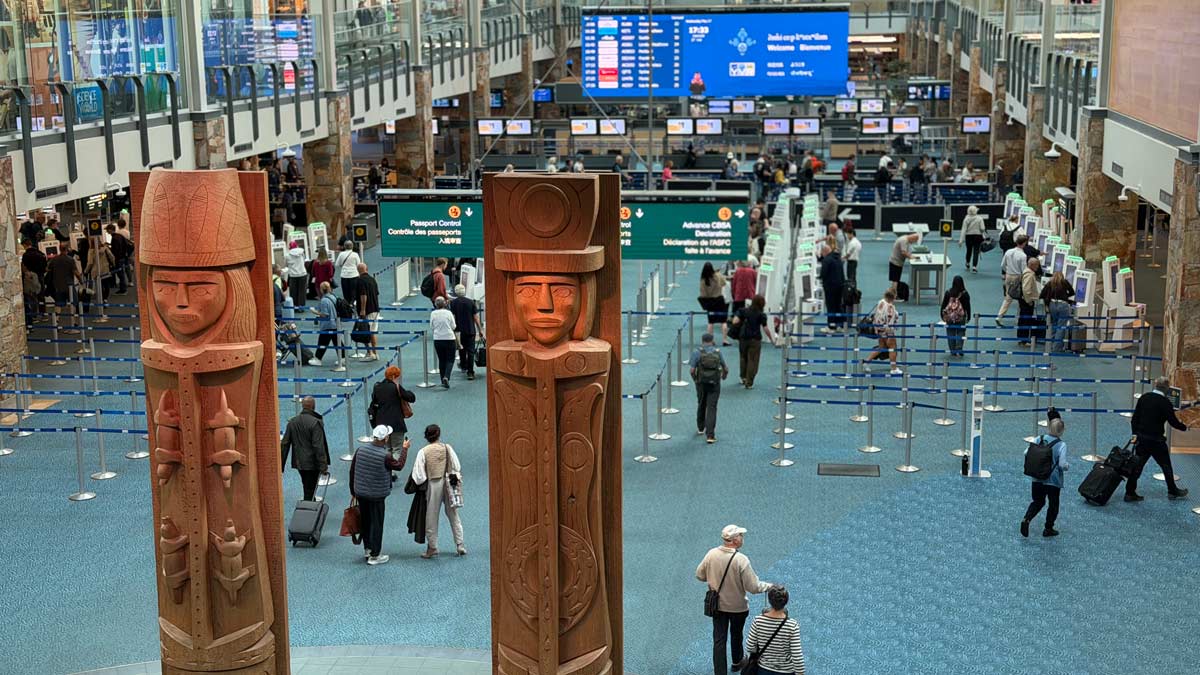
Australia has been trying to digitise the arrival card for years. I arrived in Canada recently, and it is all digitised, albeit on a standalone terminal at entry after completing details in the ArriveCAN application. It all seemed to work perfectly with a photo taken and a ‘receipt’ printed that you had to present at the actual border. Although apparently, the introduction did not go smoothly either.
The earlier “seamless traveller” ambitions from the 2010s promised smoother border processing, including facial-recognition SmartGates and eventually digital declarations. Then came the Digital Passenger Declaration, launched during the post-pandemic reopening period in 2022. Travellers will remember it fondly in the same way one remembers food poisoning: vividly, and with a desire never to repeat the experience.
That platform was axed after only a few months, which may explain why the current ATD rollout is being handled with the caution of a nervous wombat crossing a freeway.
Still, the ATD pilot has now been running since October 2024. With Brisbane, Sydney and Melbourne on board, and hundreds of thousands of declarations already processed, it is getting harder to call this a tiny experiment.
2PAXfly Takeout
This is a welcome move, but Australia still looks painfully slow compared with the digital border ambitions of places like Singapore, Dubai and Abu Dhabi, or even Canada.
As Miranda Priestly would say: “Why is this so difficult? That is all.”









What did you say?