


















NEW AIRLINE: proposed ultra low cost carrier ZINC claims place as Australia’s Ryanair
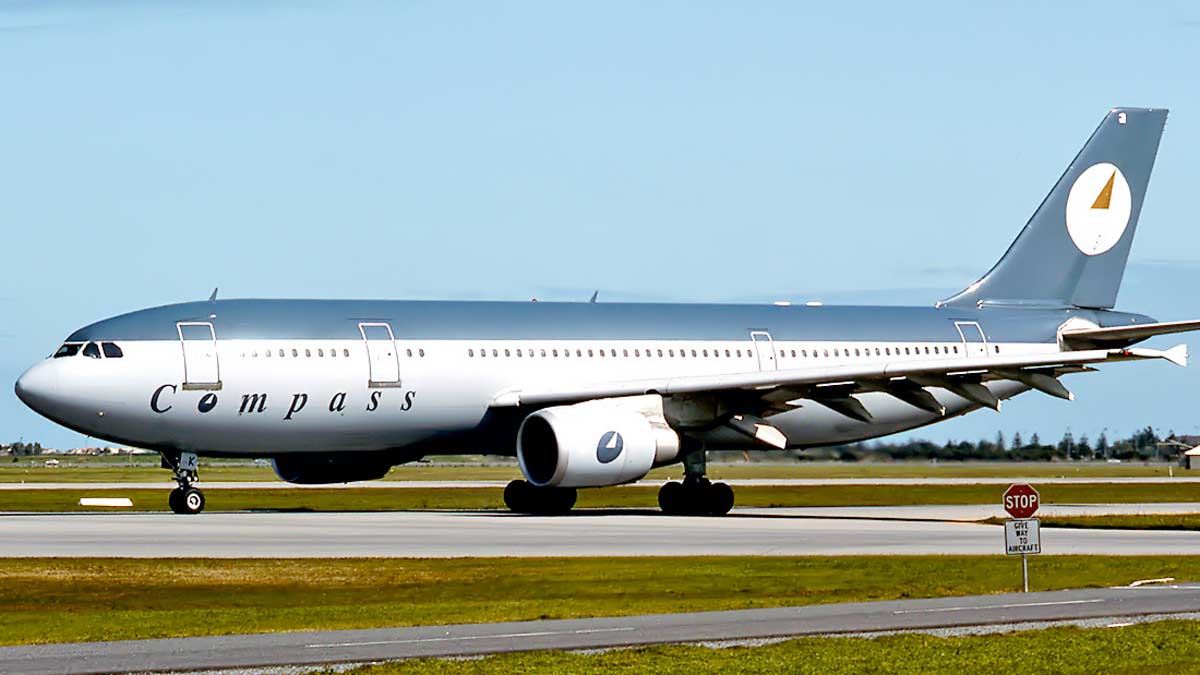
Australia has a long and fairly brutal history of killing every attempt to form a third domestic airline to compete with Virgin Australia and the Qantas Group. Compass flamed out in the early 1990s. Impulse was folded into Qantas. Virgin Blue survived, but only after Ansett’s collapse turned it into the country’s second major airline. Tigerair disappeared during COVID. Bonza lasted barely over a year. Rex’s attempt to crack the capital-city jet market ended in administration. And Koala is all talk, and not enough action. So when someone says they are going to take on Qantas and Virgin, there is no need to put the champagne on ice.
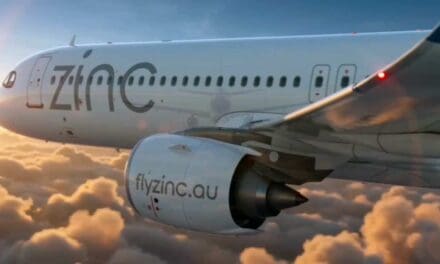
According to Ayesha de Kretser authored article in the AFR the latest contender is Zinc, a proposed ultra-low-cost carrier backed by former Qantas and Ansett executive Peter Kelly. Kelly previously ran Ansett’s Golden Wing Club, later led Qantas Frequent Flyer, worked on the Jetstar launch, and was also involved with Cobalt Air, a Cypriot carrier that shut down when a major backer withdrew financial support.
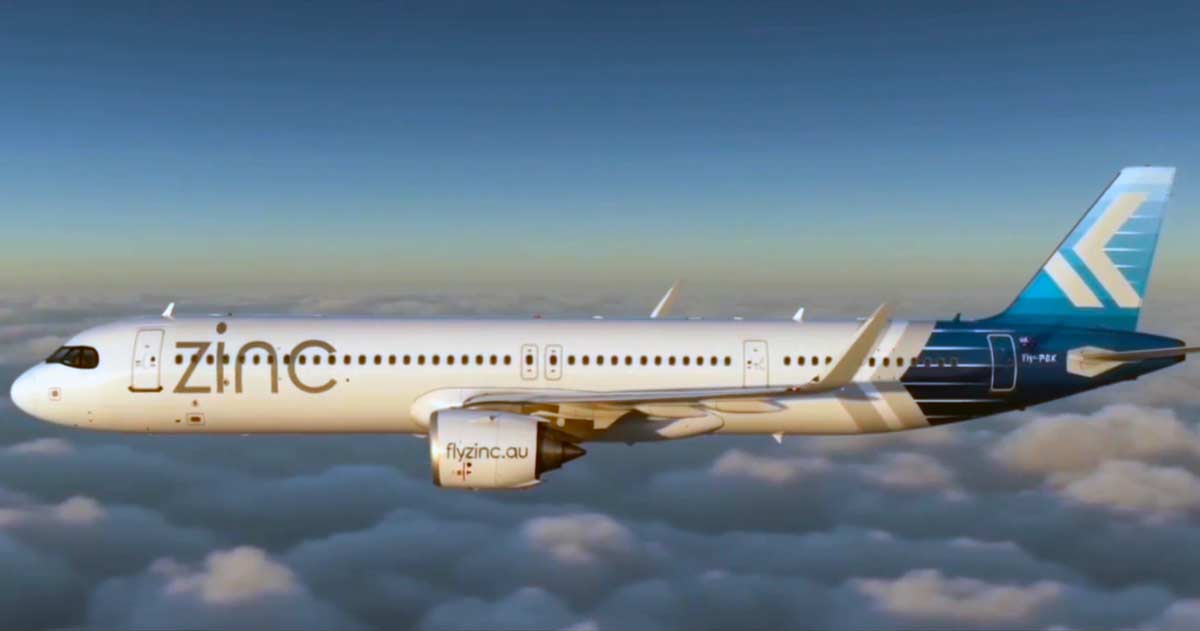
Kelly proposes to raise $200 million to get Zinc airborne, with the airline based at the soon to open Western Sydney International Airport. The pitch is to use the Ryanair playbook, fly aircraft 12+ hours a day, keep the network small and tight, and sell fares at below Jetstar prices.
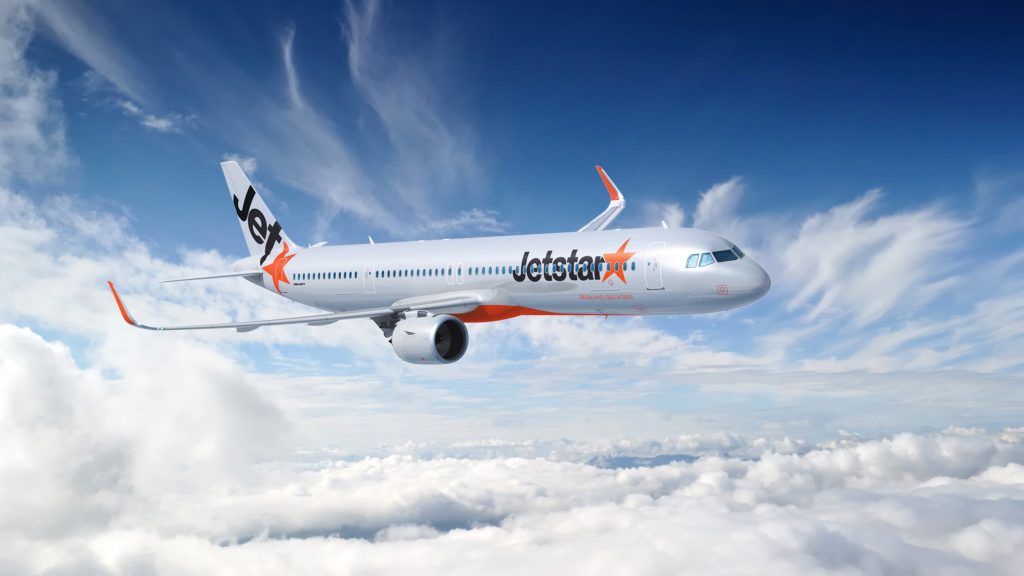
A321neos, cheap fares and everything extra
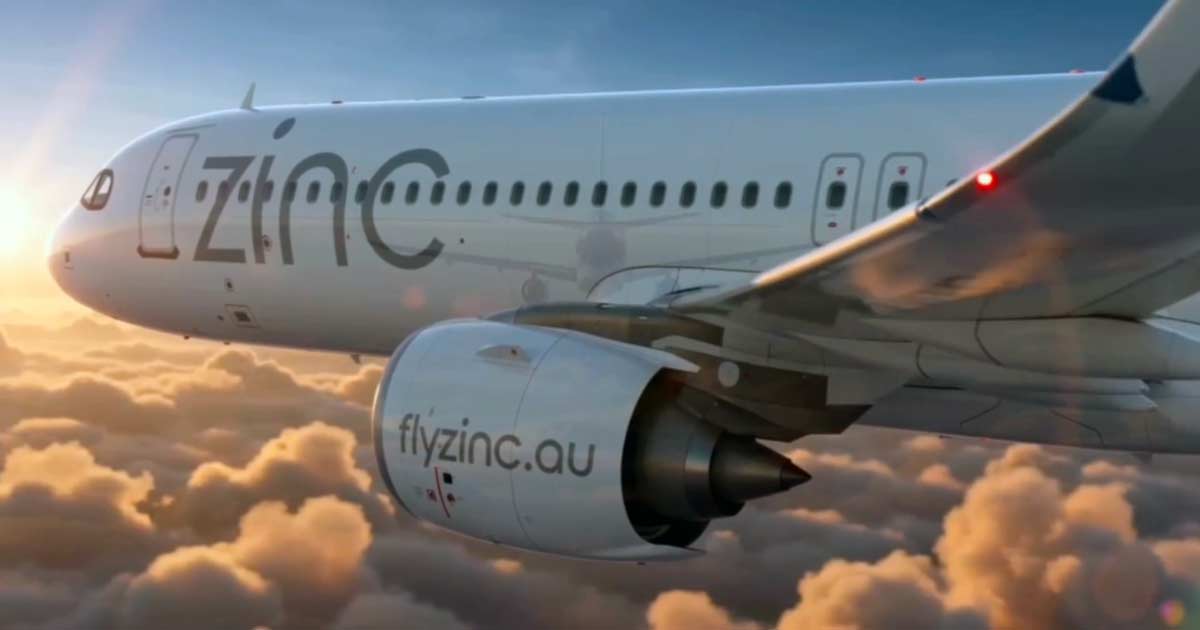
Zinc’s initial network would be the east coast domestic triangle of Sydney, Melbourne and Brisbane. The Gold Coast might be added later. The proposed fleet would be only fuel-efficient Airbus A321neos.
Funds to be raised are $100 million in equity for aircraft deposits and another $100 million in debt. Launch could occur in 17 months after finance is secured. At the moment, the airline is just a notion and a website. It still needs funding, aircraft, staff, airport agreements and approval and certification from the Civil Aviation Safety Authority.
The Ryanair model involves flying aircraft for at least 12 hours a day. And aircraft would need to finish the day at their base to simplify maintenance and cleaning.
For passengers, that means ultra-low-cost prices for the flight only, with everything else charged as extras. That includes bags, seat selection, food, beverages, flexibility and more.
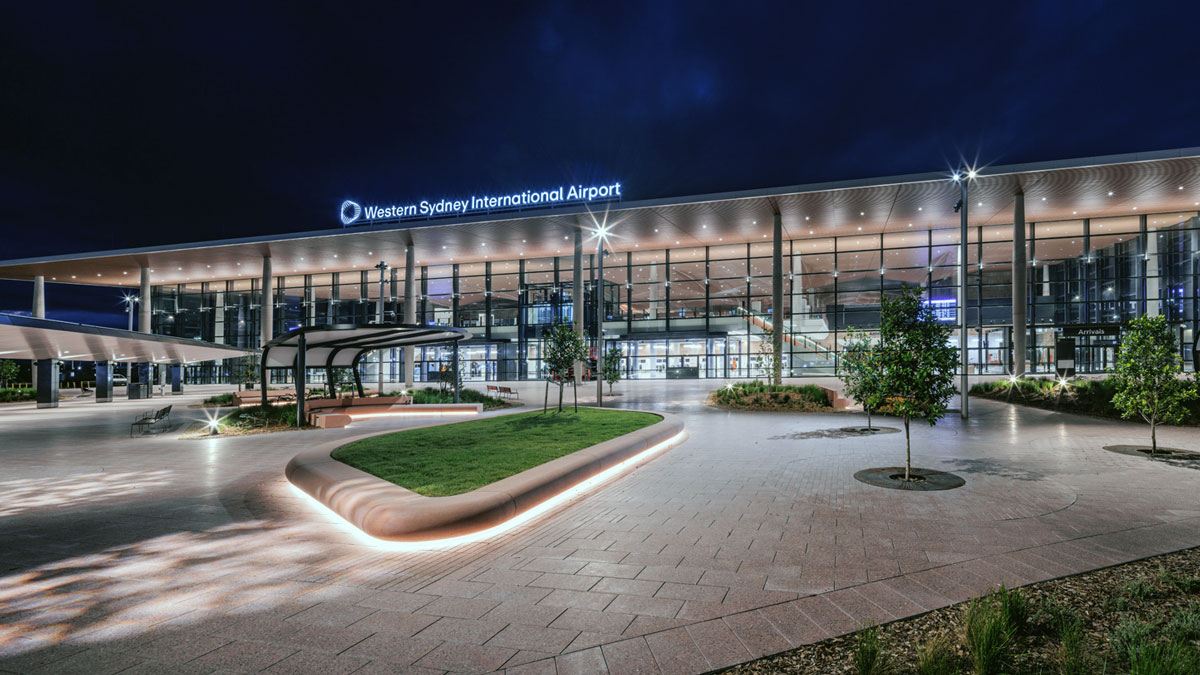
Western Sydney is proposed base
Sydney Kingsford Smith has always been a barrier for new domestic entrants. Slots are tight, gates are limited, peak-hour access is valuable, incumbents are entrenched and th airport is curfewed.. At Western Sydney, Zinc can avoid all that, plus the new airport is hungry for airlines, so a favourable deal might be done.
Qantas, Jetstar, Singapore Airlines and Air New Zealand are already committed to Western Sydney, so Zinc would not be alone. It would be restricting its market, with Sydneysiders residing in Sydney’s east, inner west, or north shore probably loath to make the trudge out to western Sydney when Kingsford Smith is closer.
The duopoly will not be handing out welcome baskets
Qantas, Jetstar and Virgin will not take the advent of Zinc lightly. Just like with REX, expect a price war. This is not their first rodeo seeing off challengers.
Zinc is hoping that anti-competitive laws and the regulators’ scrutiny, particularly around predatory pricing, will work in their favour. Western Sydney also has the advantage that it would need Qantas, Jetstar or Virgin to move capacity, potentially weakening their current networks.
I wouldn’t be so certain about that. Existing airlines have a long history in using their heft to match fares, adjust schedules, and play on their loyalty schemes to keep customers. They also have the advantage of time. They can sit and wait, especially if cashed up, while a new comer burns cash.
What travellers might gain
For passengers, Zinc’s arrival would be good news. It is an axiom of competition that more airlines and services put downward pressure on prices. The Sydney–Melbourne–Brisbane triangle is exactly where fare pressure would be most effective.
A true ultra-low-cost carrier could also suit travellers who just want a seat and nothing else. If you are flying for a weekend, carrying a backpack and paying with your own money, a stripped-back fare can be attractive.
2PAXfly Takeout
Let me put my cards on the table. I am not a fan of low-cost or ultra-low-cost carriers. I would not choose them for my own personal travel. I’m too much of a comfort pig. However, from a broader industry perspective, more competition is a very good thing, as it gives us all more options.
Zinc becomes one of the more interesting third-airline proposals because of the difference the advent of Western Sydney International makes to the aviation equation. A tightly run, single-fleet, ultra-low-cost airline on short, busy routes is not a silly idea.
But it has a very long way to go before it becomes a reality. Financing, certification and aircraft in one of the toughest aviation markets in the world is no walk in the park.
Ryanair might be the biggest European airline by passenger numbers, but remember that Spirit Airlines in the USA just went bust in a hail of debt amidst the jet fuel price crisis.








What did you say?