















RIYADH AIR: What are reviewers’ first impressions
Saudi Arabia’s new flag carrier, Riyadh Air, has now carried its first paying passengers in its own Boeing 787-9 Dreamliners. The early verdict from critics is fairly consistent.
Riyadh Air looks exceptionally good. It is serving food, drinks and attention at a level many established airlines would struggle to match. Its crew appear warm, professional and unusually invested in the project.
It is also, rather understandably, still learning how to be an airline.
Consensus
Let me be clear, I have not flown on this new airline. This article is based on others’ perceptions of their experience with Riyadh Air.
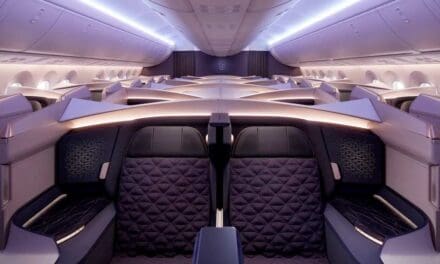
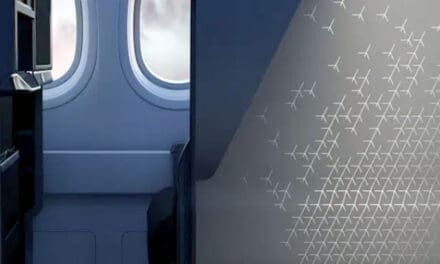
The consensus from reviewers who have flown its inaugural and early scheduled services is that Riyadh Air has created one of the most distinctive cabin products in the sky. The colours, fabrics, lighting, uniforms and Saudi design references feel coherent.
However, the hard question is whether this is a better experience than flying with Emirates, Qatar Airways or Etihad. On that comparison, the answer is not yet. Riyadh Air has an excellent foundation, but it also makes some surprising compromises in comfort. (The Flight Club)
The cabins look better than most, but …
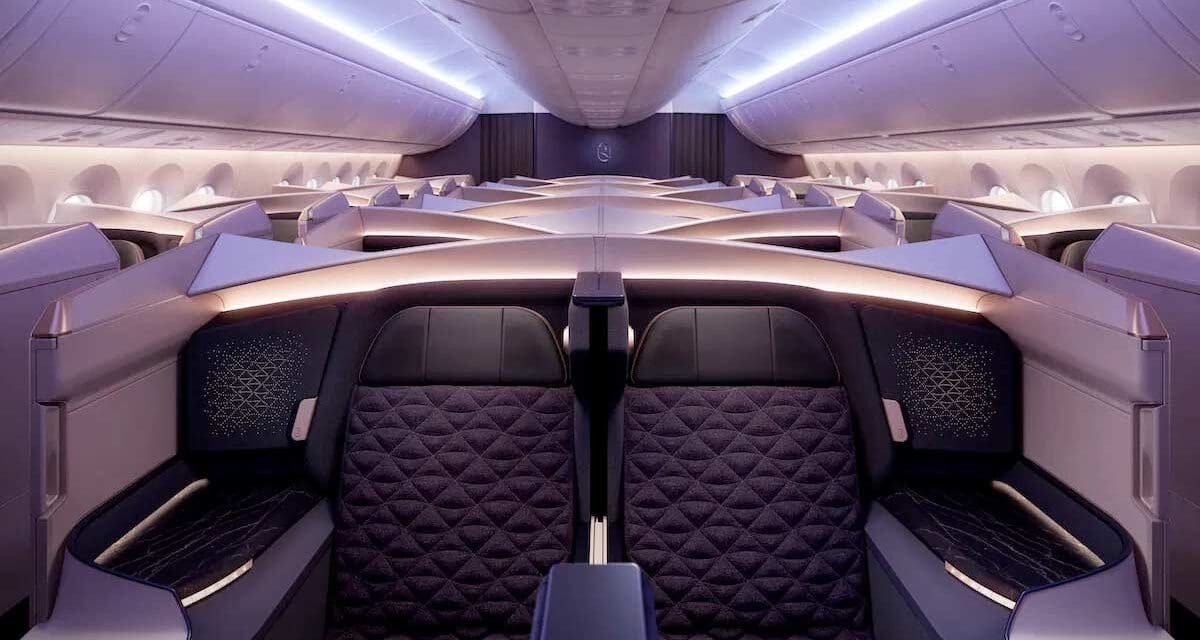
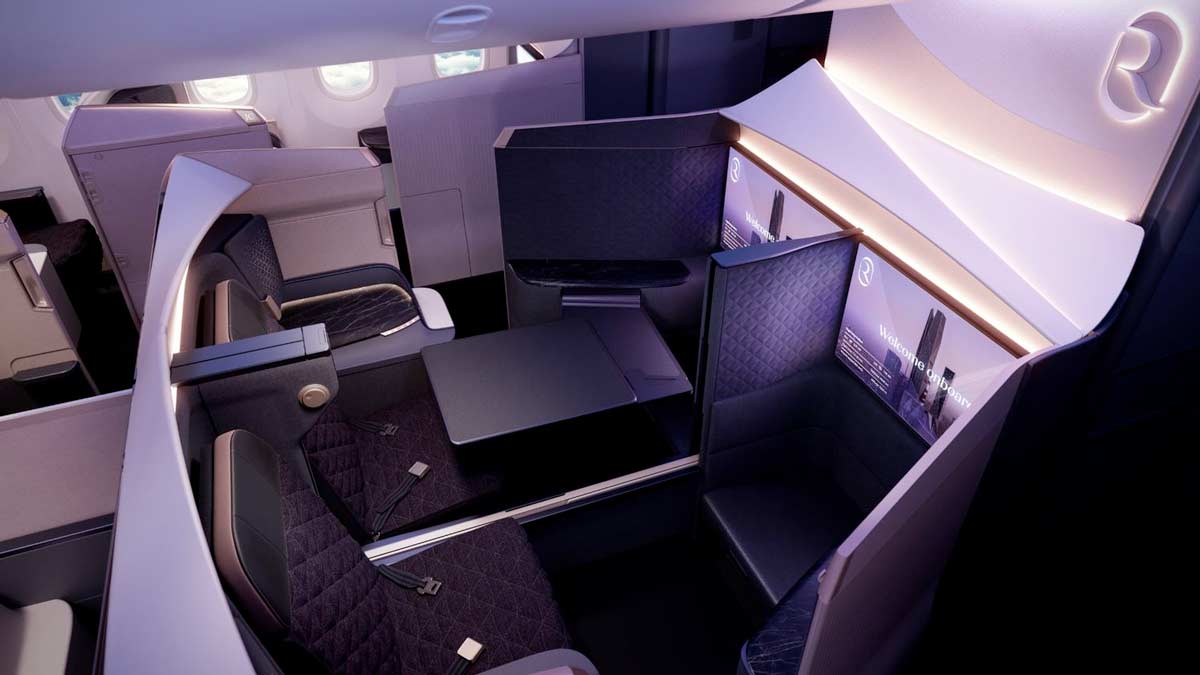
Riyadh Air’s 787-9 has four Business Elite suites, 24 standard business-class suites, 39 premium economy seats and 223 economy seats. The indigo, plum, lavender and faux-stone finishes give the aircraft contrast with some of the usual airline grey interiors.
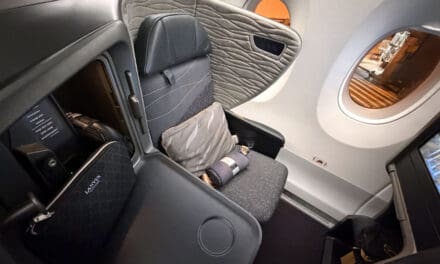
According to the Middle East version of Condé Nast Traveller, Business Class is the strongest cabin. The 1-2-1 layout gives every passenger direct aisle access, privacy doors and tall suite walls. Condé Nast Traveller Middle East found the bed especially comfortable, helped by a substantial mattress pad, plush bedding and fabrics which make the suite feel warmer than many contemporary business cabins. The Flight Club was similarly impressed, describing the experience as one of its best business-class sleeps.
But this is not an automatic Qsuite-beater. Nonstop Dan found the standard Safran Unity seat good rather than exceptional. He cited tight knee room before recline, limited storage, a small tray table, a non-adjustable screen and no individual air vents. The built-in Devialet headrest speakers are clever, though not every reviewer found their sound quality competitive.
Riyadh Air is positioning itself at the top of one of aviation’s most competitive markets. At this level, a seat needs offer something exceptional to drag it above the pack.
Premium Economy, comfort has been compromised
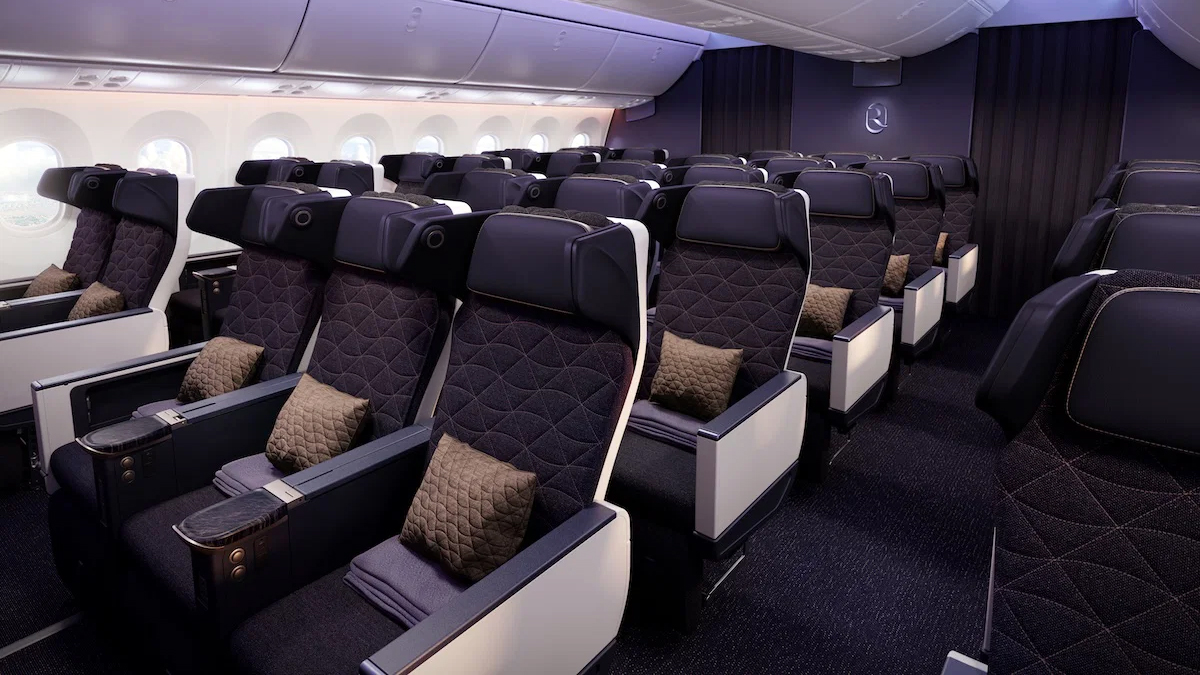
Visually, Premium Economy makes a spectacular first impression. The 2-3-2 cabin has rich finishes, serious mood lighting and plentiful charging. The service sequence includes fresh juice, hot towels, Saudi coffee and dates. IIf looks were comfort, it would beat many rivals’ premium-economy cabins.
The trouble is that the seat itself is compromised. Nonstop Dan found the legroom below expectations, the headrest hard and barely adjustable, and the recline intrusive for the passenger behind. Window-seat passengers may struggle to get out once the person ahead reclines. ,The Premium Economy cabin does not have its own bathrooms. They are shared with economy passengers.
For a short domestic flight, none of that is fatal. On a long overnight service to Europe, Asia or eventually Australia, it makes Riyadh Air’s Premium Economy less competitive than Emirates’ more established offering.
Economy gets technology, but no extra space
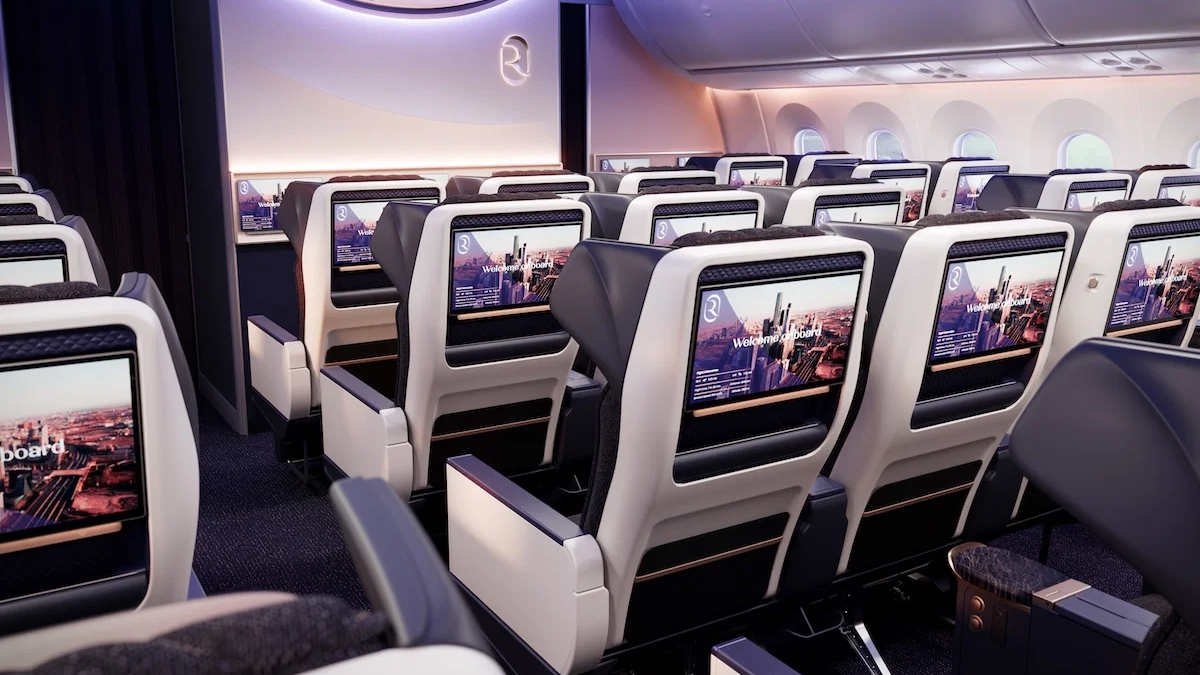
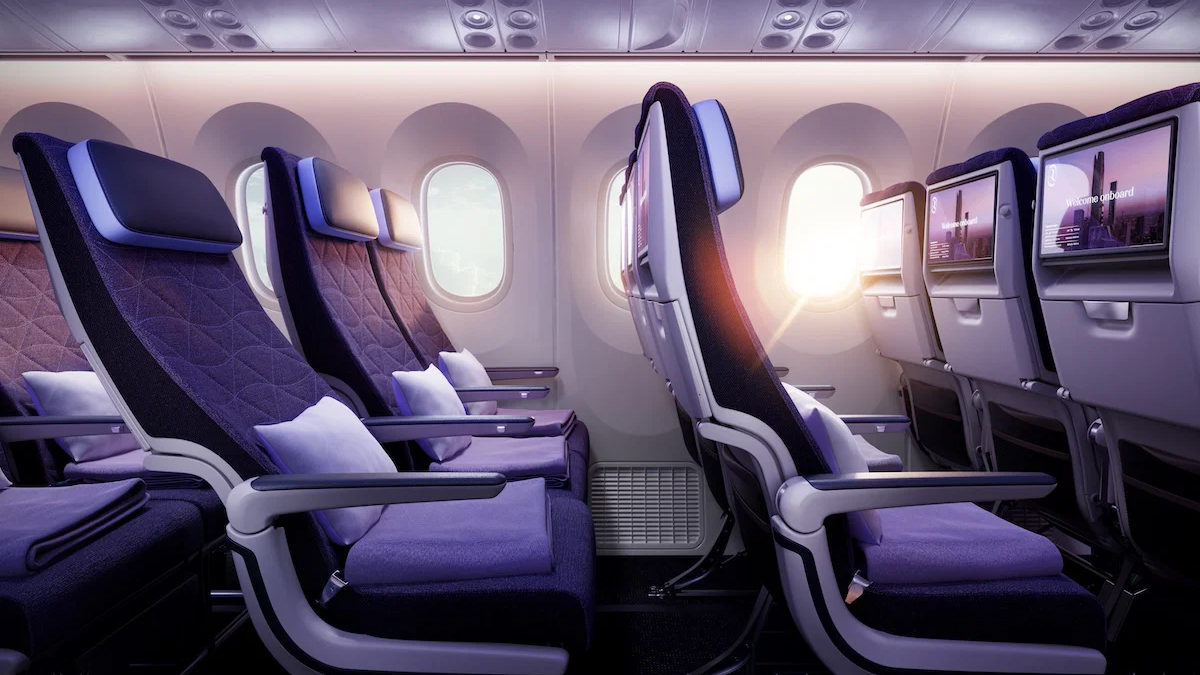
Economy has large anti-glare entertainment screens, good software, free Wi-Fi and mood lighting that makes a standard 3-3-3 Dreamliner cabin look dull.
The seat, however, is a 31-inch-pitch economy seat. That is on the small side of normal for a Boeing 787. But to be a winner in this category it needed to be more generous. The recline is said to be substantial enough to make life uncomfortable for taller passengers behind. Even the decorative stitching comes in for criticism as feeling lumpy against a passenger’s back. There are also no personal air vents, which in many travellers’ eyes (me for one) is a sin of omission.
The entertainment system is excellent, despite missing basics like a search function. Economy and Premium Economy also share six bathrooms between 262 passengers. That’s a toilet/passenger ratio of 1/44, which could become an issue for a full aircraft on a long-haul service.
Impressive service
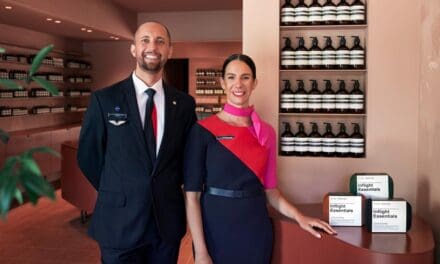
The soft product has earned the warmest reviews. Crew are described as friendly, polished and enthusiastic. Many early recruits have experience at Emirates, Qatar Airways, Etihad, Oman Air and Gulf Air.
Meals, drinks and small details are above the usual standard. On short domestic services, Riyadh Air has offered metal cutlery, attractive meals, hot towels, Saudi coffee and dates. Business-class passengers received amenity kits and pyjamas on a flight of around 90 minutes. That is generous.
Launch flights are not normal flights, however. Some early services have had light loads, while reviewers have noted slow Wi-Fi, immature entertainment content and minor technical glitches such as suite call buttons acting up. It will be interesting to see if these standards are maintained as the airline grows with more services, staff and aircraft.
Riyadh Air compared to other Middle East airlines
Riyadh Air does not yet have Emirates’ scale, Qatar Airways’ network depth or Etihad’s operational maturity. Those airlines have spent decades refining their hubs, lounges, alliance partnerships, disruption recovery and frequent-flyer programmes.
Qatar Airways’ Qsuite remains more versatile for couples, families and colleagues travelling together. Emirates offers a better premium-economy product, while Etihad has a more established premium travel ecosystem in Abu Dhabi.
Riyadh Air’s business cabin is arguably more visually coherent than much of what its rivals operate. Its best seats are competitive, its bedding has drawn praise and its Saudi design language is genuinely distinctive. But its economy cabin is standard rather than leading. Its Premium Economy is compromised on space and seat comfort. That matters after hour six.
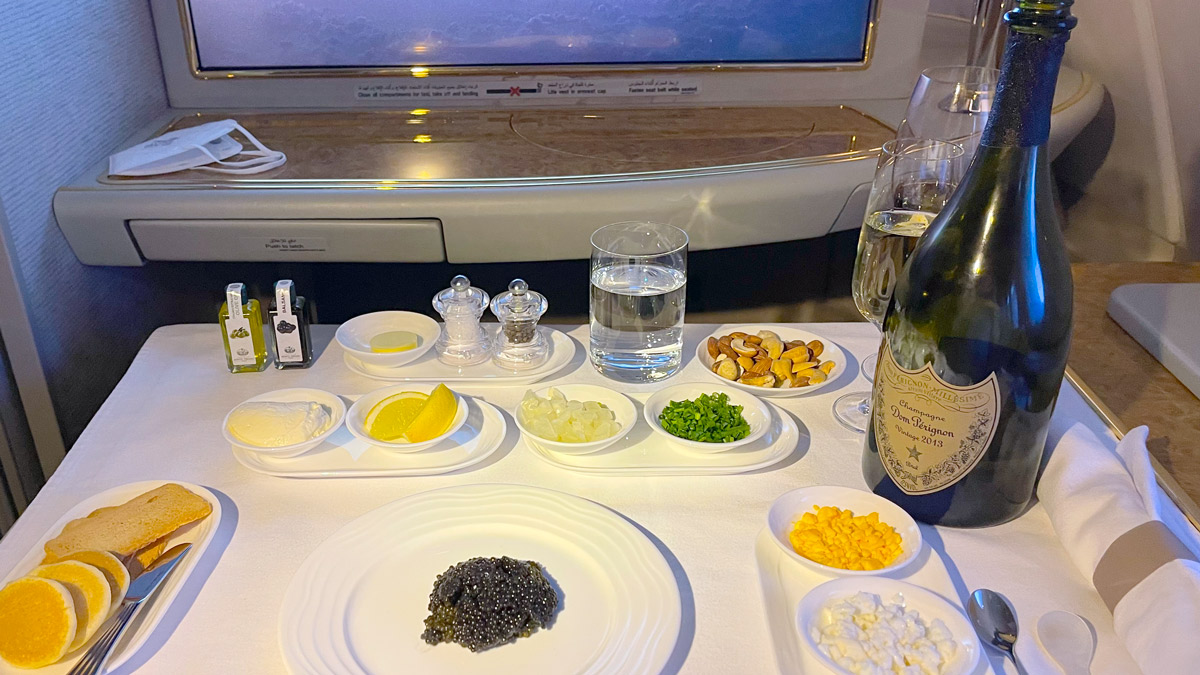
Then there is alcohol. Riyadh Air is a dry airline. Some premium travellers will mark Riyadh Air down for this compared to other Gulf rivals. For some, a Business Class fare without wine, beer or champagne is a far-from-premium offering. On the non-alcoholic hand, the mocktails, fresh juices and Saudi coffee have been praised.
Saudi Arabia’s broader social and political context will also influence whether some travellers are willing to connect through Riyadh, regardless of the seat or the service. The Times noted that this remains a particular consideration for women and LGBT travellers, alongside wider concerns about the kingdom’s human-rights record.
2PAXfly Takeout
Riyadh Air has not entirely avoided the problem of launching by over primising, and under delivering. Its cabins look excellent, its crew appear capable, and business class has the makings of a serious contender.
But the consensus among those who have experienced the airline is that it is not yet a new Emirates or Qatar Airways.
The airline’s next test is whether the service, Wi-Fi, seat comfort, connections and disruption handling still feel this polished when a full 787 is leaving London late, with several banks of passengers connecting through Riyadh. That will be the real test. And according to Riyadh’s expansion plans, that test won’t be far off.






What did you say?