















BOEING: Bird strikes, smoke and the cabin air problem that won’t go away
There are bird strikes. There are fume events. And then there are bird strikes that lead to smoke or oil mist entering the cockpit and/or cabin.
That is the issue now ruffling feathers around Boeing’s 737 MAX, its LEAP-1B engines, and the regulators charged with deciding whether this is a rare but alarming event needs a faster fix.
Sometimes safety events are not about beligerant passengers, or batteries burstinginto flames, but about what happens when a large bird meets an aircraft engine at the wrong moment.
The concern centres on two 2023 Southwest Airlines Boeing 737 MAX 8 incidents.
In one, shortly after departure from Havana, birds struck the right engine and a vapour fog entered the passenger cabin. The aircraft returned safely.
In another, departing from New Orleans, a bird was ingested into the left engine. Smoke entered the cockpit, pilots donned oxygen masks, declared an emergency and returned safely. The event was serious enough for the US National Transportation Safety Board (NTSB) to issue urgent recommendations.
The LEAP-1B engines on the 737 MAX include a load reduction device, or LRD. It is designed to protect the aircraft structure when there is serious engine imbalance, such as after fan damage. In the incidents under investigation, activation of that system could release oil into hot engine areas, producing smoke or fumes that then enter the aircraft’s environmental control system. You know, air conditioning.
Cabin bad, cockpit worse
Smoke in the cabin is alarming enough. But pilots have a high workload during take-off and landing. Add reduced visibility, oxygen masks, checklists, alarms, possible engine damage and the need to return or divert, and safety investigators treat this as a more than a passenger comfort issue.
The NTSB has warned that pilot action can reduce the amount of smoke, but that the better answer is a software modification that closes the relevant valve more quickly after LRD activation. Boeing and engine-maker CFM International have been working on that fix.
In the meantime, the NTSB wants pilots better informed and trained for the possibility that smoke could enter the cockpit or cabin after severe engine damage.
These rare events are exactly what training, checklists and regulation are designe to handle before they become accidents.
![Virgin Australia new interior for the Boeing 737-8 and their new MAX jets [Virgin Australia]](https://www.2paxfly.com/wp-content/uploads/2022/12/Virgin-Australia-va-737-new-interior-2021-1196x675.jpg)
Just a Boeing problem
Inconveniently for Boeing, this specific issue is tied to the 737 MAX’s LEAP-1B engines and the way their systems interact with the aircraft.
The issue of cabin air contamination is not new and not confined to Boeing. Modern aircraft typically use “bleed air” drawn from engines or auxiliary power units to supply the cabin and flight deck. If oil, hydraulic fluid or other contaminants enter that stream, crews and passengers can experience odours, haze, irritation, nausea, dizziness and even neurological symptoms.
CASA, Australia’s aviation safety regulator, issued updated guidance on smoke and fume events in February 2026. Fumes, smoke, haze or mist can come from several sources. These include from the engine or APU, hydraulic fluid, exhaust gases, electrical emissions, cleaning products or cabin equipment.
Australian angle
Australia does have 737 MAX exposure.
Virgin Australia operates the more fuel efficient Boeing 737-8 aircraft, also known as the 737 MAX 8, powered by LEAP-1B engines. The aircraft is central to its fleet renewal program, replacing older 737s.
Qantas, by contrast, continues to operate older Boeing 737-800s, not the 737 MAX, and is moving its domestic narrowbody renewal towards the Airbus A321XLR and A220 families. Jetstar is also an Airbus narrowbody operator.
Domestically, the 737 MAX question is most relevant to Virgin passengers. Internationally, Australians may also encounter MAX aircraft on overseas airlines.
None of this means you should avoid the 737 MAX. The aircraft is heavily scrutinised, and regulators are well aware of the issue. The point is that the fix-and-training process matters, especially when the same basic event — bird strike, engine damage, smoke, has now produced enough concern for investigators to push for urgent action.
![Virgin Australia 737 MAX-8 [Virgin Australia]](https://www.2paxfly.com/wp-content/uploads/2019/05/Virgin-Australia-737max-gallery-large-02-1024x576.jpg)
Regulators move, but not always at passenger speed
In the US the Federal Aviation Administration (FAA) reviewed the issue and did not initially require immediate action. The US Department of Transportation’s Inspector General later found the FAA had followed policy, but said further assessment was warranted.
That is the sort of phrase that sounds calm in a report and less calming when you are sitting in the front row watching smoke creep down the aisle.
EASA, Europe’s aviation regulator, has also issued safety information on the risk, noting that smoke or fumes can reduce vision, cause discomfort, diminish crew performance and potentially affect safety. It also makes clear that correct crew procedures can isolate the affected engine bleed source and stop the smoke source.
So, the interim answer involves pilot procedure. The longer-term answer is technical.
What passengers should expect
What passengers can reasonably expect is that airlines operating affected aircraft will have briefed crews, updated procedures, incorporate training and apply any mandated software or engineering fix once approved.
If there is a fume or smoke event onboard, follow crew instructions. Do not film first and breathe later. And do not assume a strange smell is harmless simply because there is no visible smoke.
For anxious flyers, be assured that both Southwest aircraft landed safely. The system worked. But aviation safety improves precisely because investigators look at the moments where the system worked. They then ask how to reduce the stress next time.
2PAXfly Takeout
There is some debate particularly in the US about the need for both a proceedural and a technical software update, especially amongs pilot and flight attendant bodies.
The implementation of both will take time. Some involved think that a 2028 deadline for both fixes is a little slow, while others are satisfied by the timeline.
For a look at those aspects, you can read the article in the SMH by Chris Zappone, if you can access it.
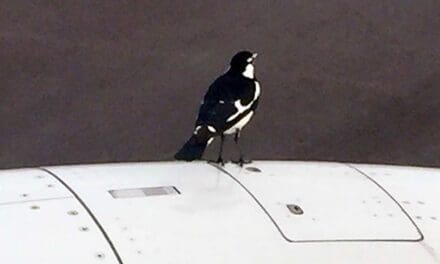
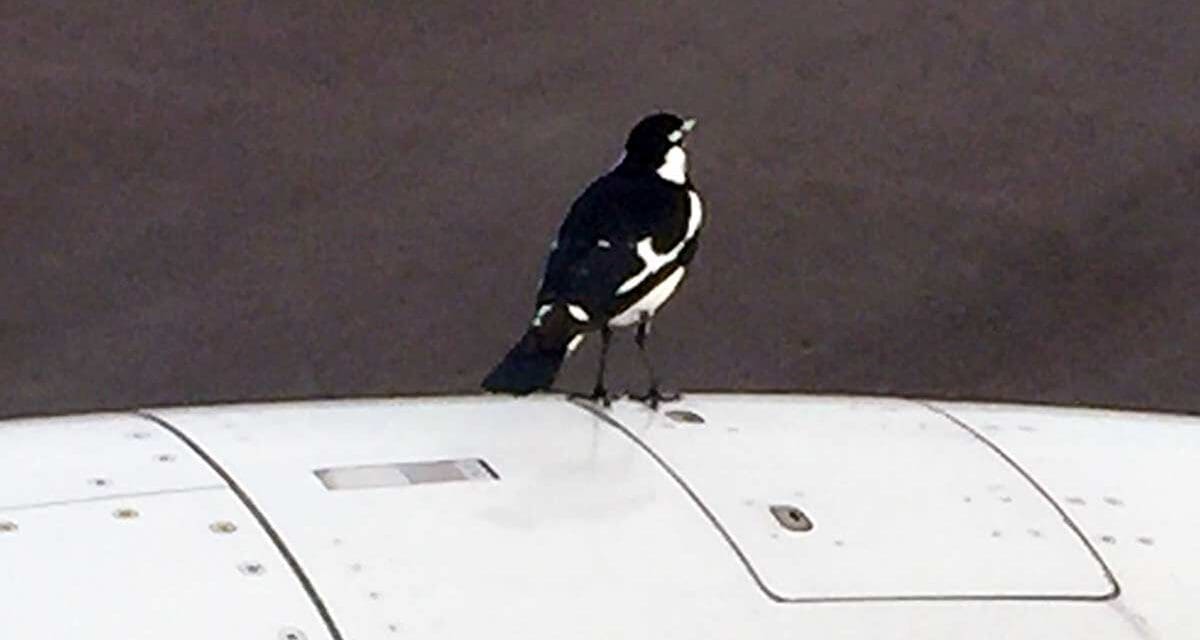
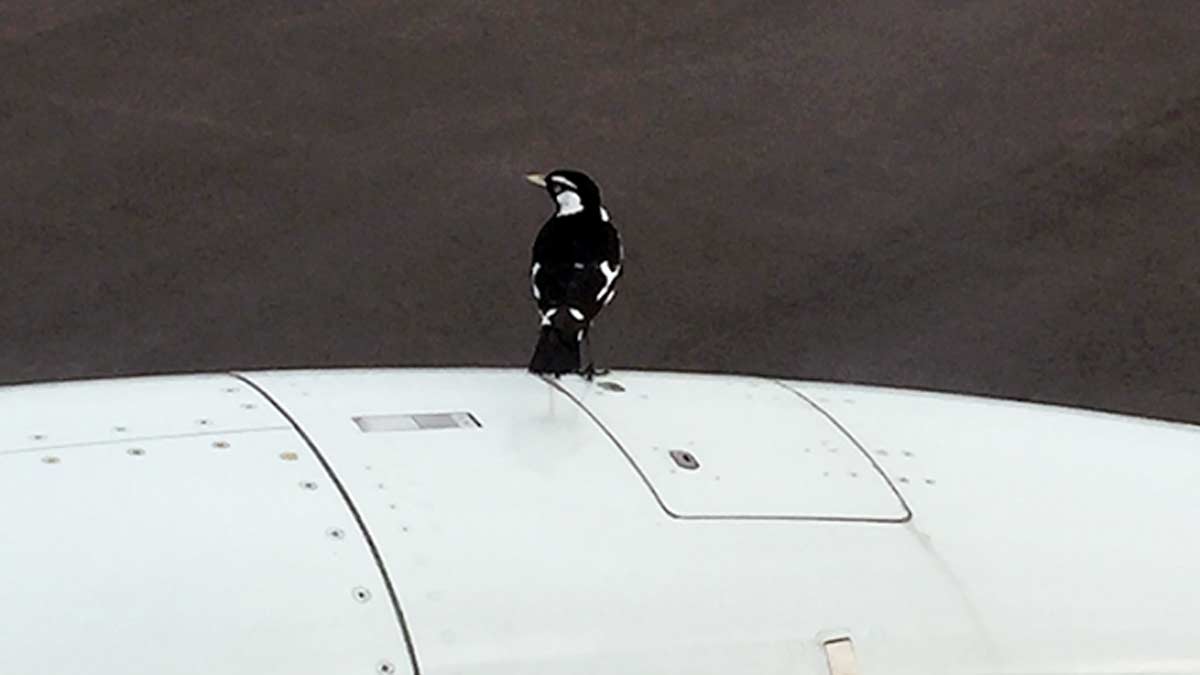
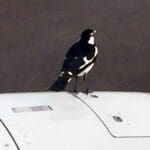
I should also point out that in the piping shriek on the engine cowel incident in Adelaide, pictured, the threat was dispersed after about 10 minutes when the bird flew off. No bird strike of animal death was involved.






What did you say?