


















EXPLAINER: What’s the difference between narrow-body versus widebody aircraft?
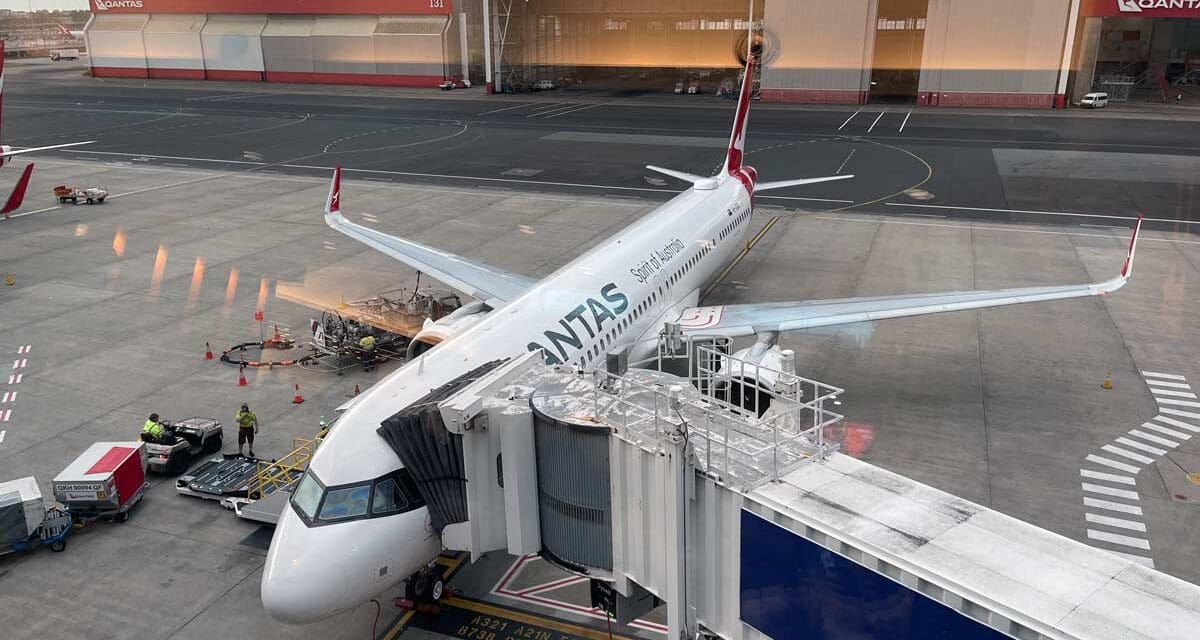
It used to be largely true that wide-body aircraft were for long-haul flights and narrow-body aircraft were for short-haul flights. Bue recently, and especially since the advent of the Airbus A321XLR, that distinction no longer holds. What largely holds is the level of comfort and service provided on the different-sized bodies. Here is an explainer.
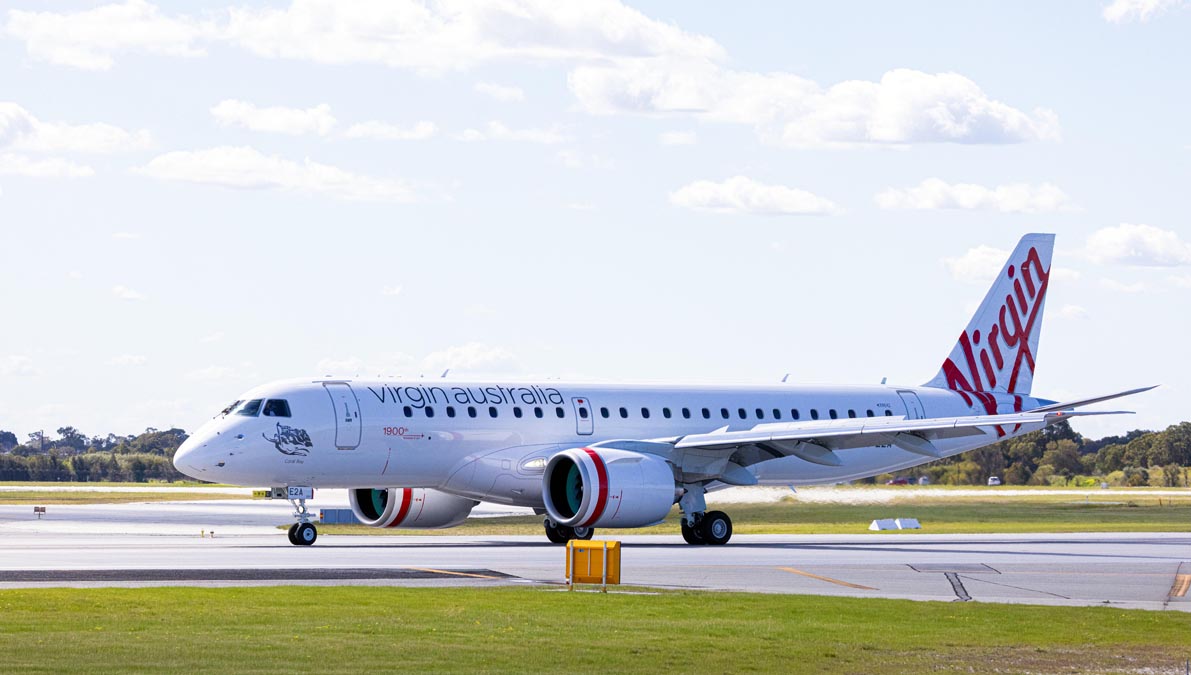
Narrow-body aircraft
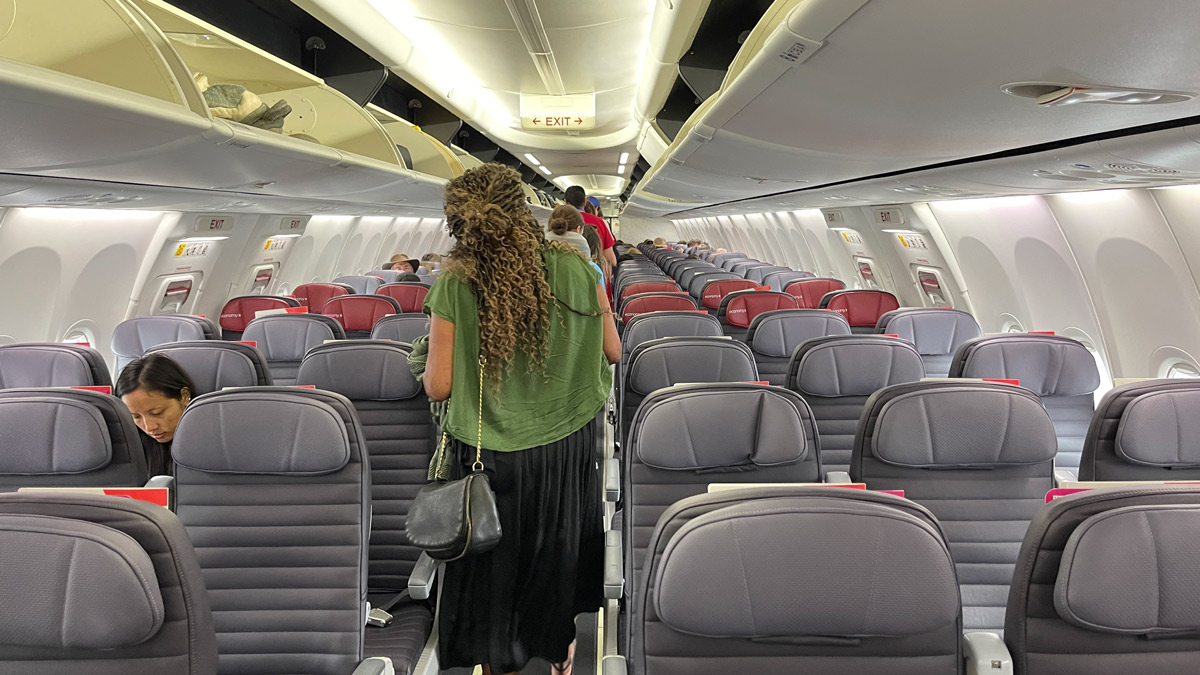
A narrow-body aircraft has a single aisle. Think Boeing 737 or Airbus A320 family. In Economy, these usually have six seats across: three on each side of the aisle. In domestic business class, Australian layouts usually have four seats across: two on each side.
The new A220s that Qantas has, and is using predominently on regional routes have a 2-2 layout in Business, but a 2-3 layout in Economy.
These aircraft are the workhorses of domestic and short-haul flying. They are cheaper to operate, can turn around quickly, and fit into a wide range of airports. You are most likely to meet one on Sydney–Melbourne, Brisbane–Cairns, Perth–Adelaide, hops across the Tasman, or flights to Bali, Fiji and parts of Southeast Asia.
The trade-off? One aisle means service carts, wandering toddlers and people queuing for the loo all share the same narrow corridor. Overhead locker space can also become a minor blood sport, especially on full flights where some passengers have interpreted ‘one small carry-on item’ as a wardrobe-sized duffle bag.
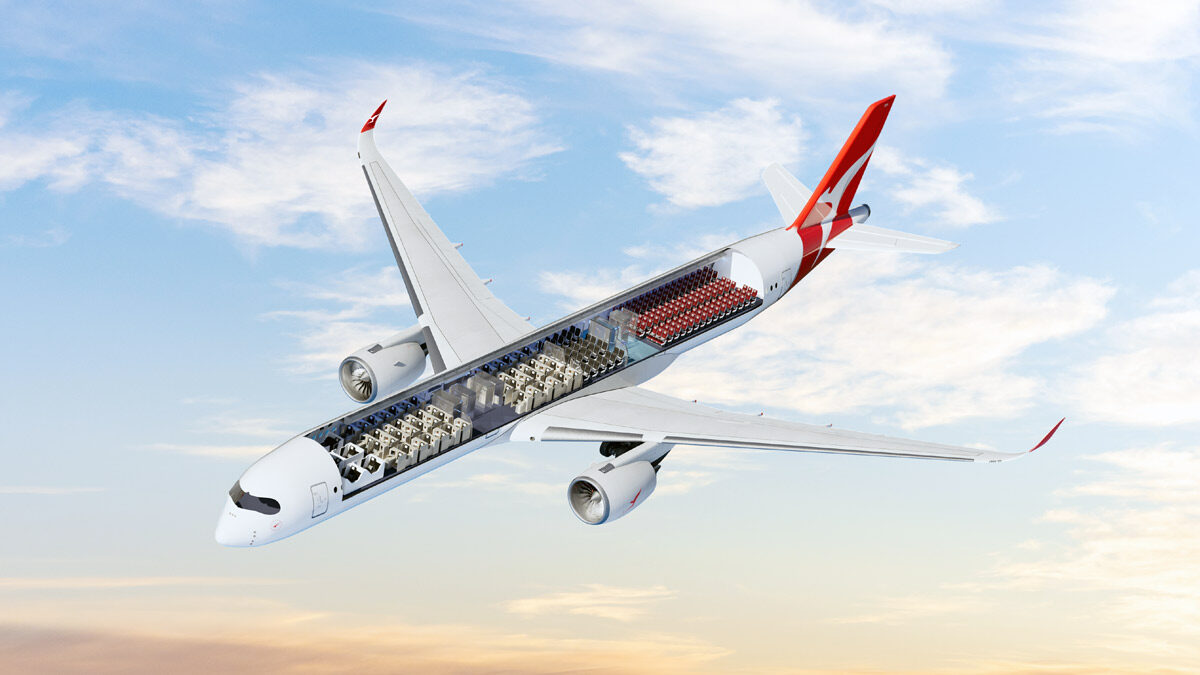
Widebody aircraft
A widebody aircraft has two aisles. These are the big international jets: Airbus A330, A350 and A380; Boeing 777 and 787. Economy layouts vary, but you might see 2-4-2, 3-3-3 or 3-4-3 depending on the aircraft, airline and density chosen.
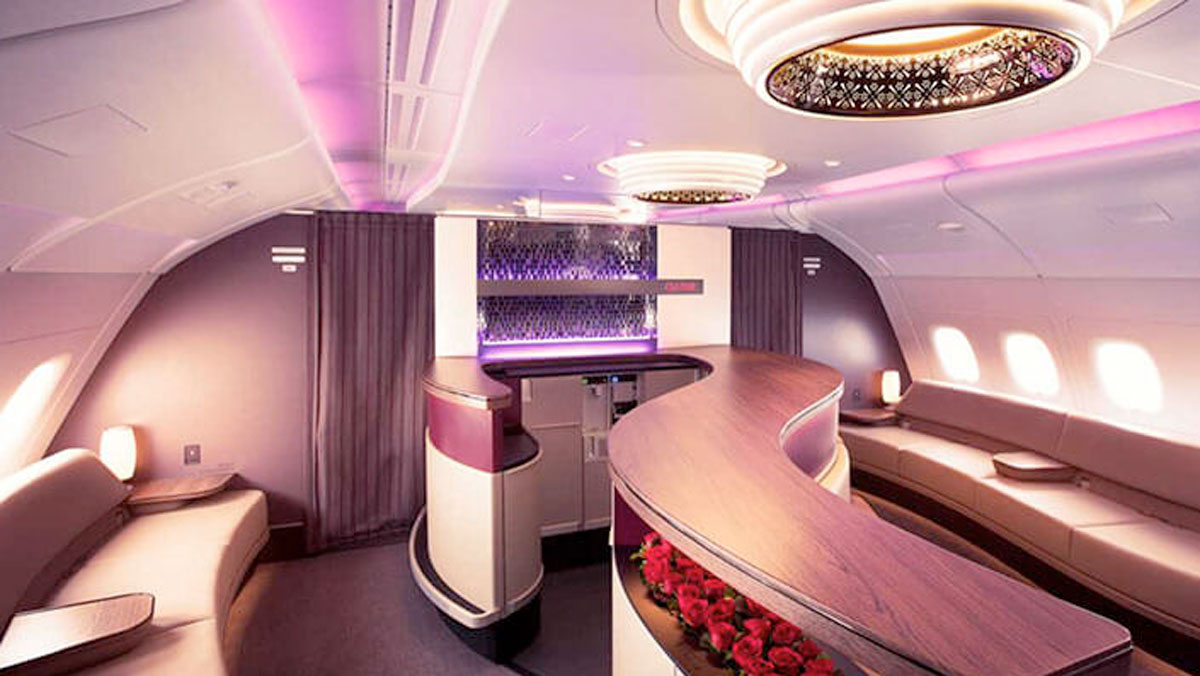
Widebodies are generally used on long-haul international flights and some busy domestic trunk routes. They carry more passengers, more cargo and more fuel. They also allow airlines to install proper long-haul cabins: lie-flat business class, premium economy, crew rest areas, larger galleys, and, increasingly rarely, First Class.
For passengers, the main benefits are range, cabin choice and a less cramped feel. Not always more personal space, mind you. Airlines are quite capable of turning a beautiful aircraft into a flying sardine tin. But widebodies usually offer more toilets, more galley space, and a better setup for long-haul flights.
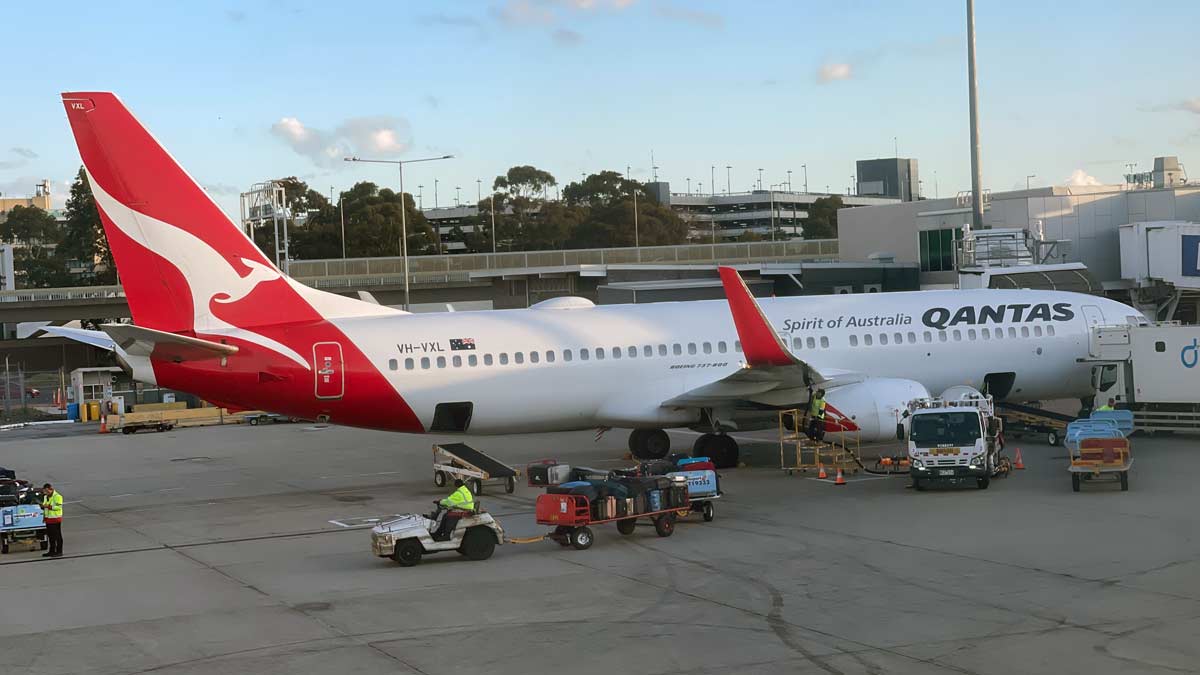
Australian airlines and the narrow-body aircraft they fly
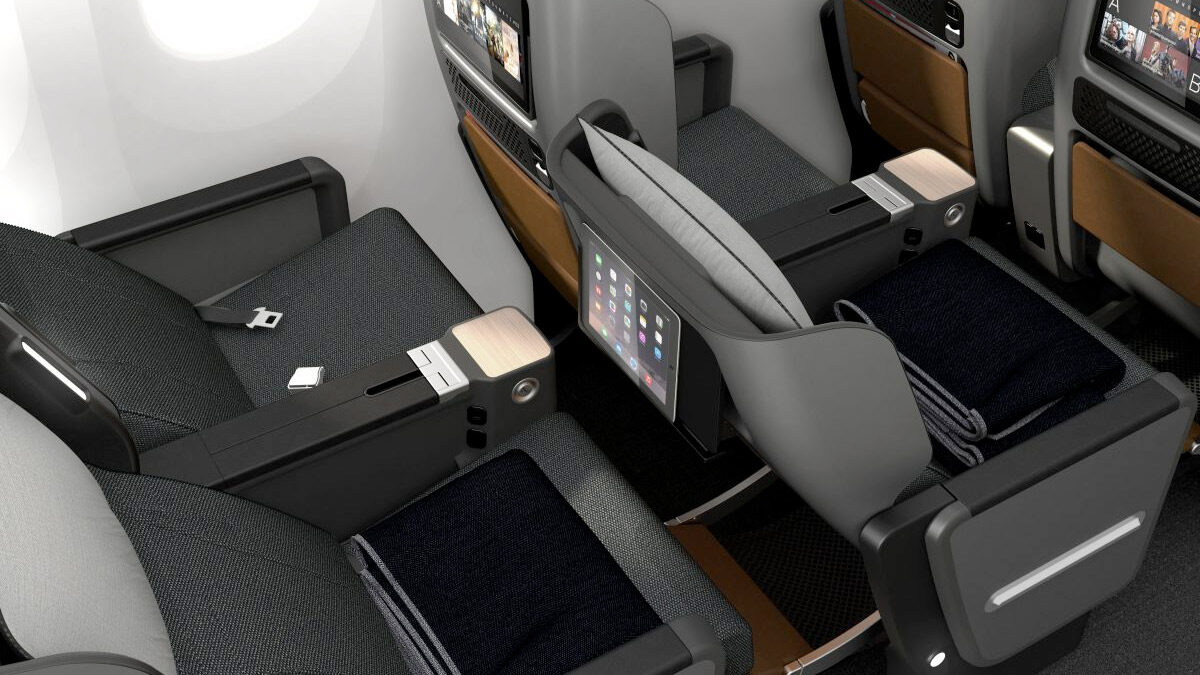
Qantas still relies heavily on the Boeing 737-800 for domestic and short-haul flights, but the future increasingly lies with Airbus. QantasLink is introducing the Airbus A220-300 to replace older Boeing 717s on domestic and regional routes. Qantas is also rolling out the Airbus A321XLR, a longer-range single-aisle aircraft that can serve domestic routes and reach Southeast Asia and the Pacific.
That A321XLR is important. Although the initial deliveries of A321XLRs at Qantas are not exactly long-haul glamour machines. They have around 197 to 200 seats, no seatback entertainment, and only three toilets. That is manageable on shorter flights, but less delightful on longer evening sectors unless you have a strong bladder and a downloaded Netflix queue. Later deliveries will be more suited to long haul with an additional toilet mid aircraft, and we hope to offer lie flat beds in Business Class.
Jetstar, part of the Qantas Group, flies Airbus A320s, A320neos and A321LRs across domestic, trans-Tasman and short-to-medium international routes. It also has Airbus A321XLRs on order, which should allow it to add international routes without relying on its widebody Boeing 787 fleet.
Virgin Australia is essentially a narrow-body airline when using its own aircraft. Its mainline fleet is built around Boeing 737s, including 737-700s, 737-800s and newer 737-8 aircraft. It also has some Airbus A320s and is bringing Embraer E190-E2s into Virgin Australia Regional Airlines.
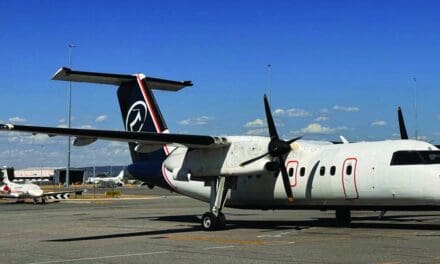
Rex is a different case. Its surviving regional network is built around Saab 340 turboprops rather than narrow-body jets. Its Boeing 737 capital-city experiment is, to put it bluntly, was not well managed and has since gone kaput.
Australian airlines and the widebody aircraft they fly
Qantas is Australia’s main widebody operator. It uses Airbus A330s, Airbus A380s and Boeing 787-9 Dreamliners across international services and selected domestic flights. The A330 is the familiar medium-to-long-haul workhorse. The 787-9 handles long-haul routes, including North America and Europe via Perth. The A380 remains the big beast for high-demand long-haul routes where capacity and premium cabins matter.
Jetstar also flies widebodies: its Boeing 787-8 Dreamliners operate longer international leisure routes to Japan, Thailand, South Korea, Vietnam, Indonesia, and Hawaii, depending on the schedule.
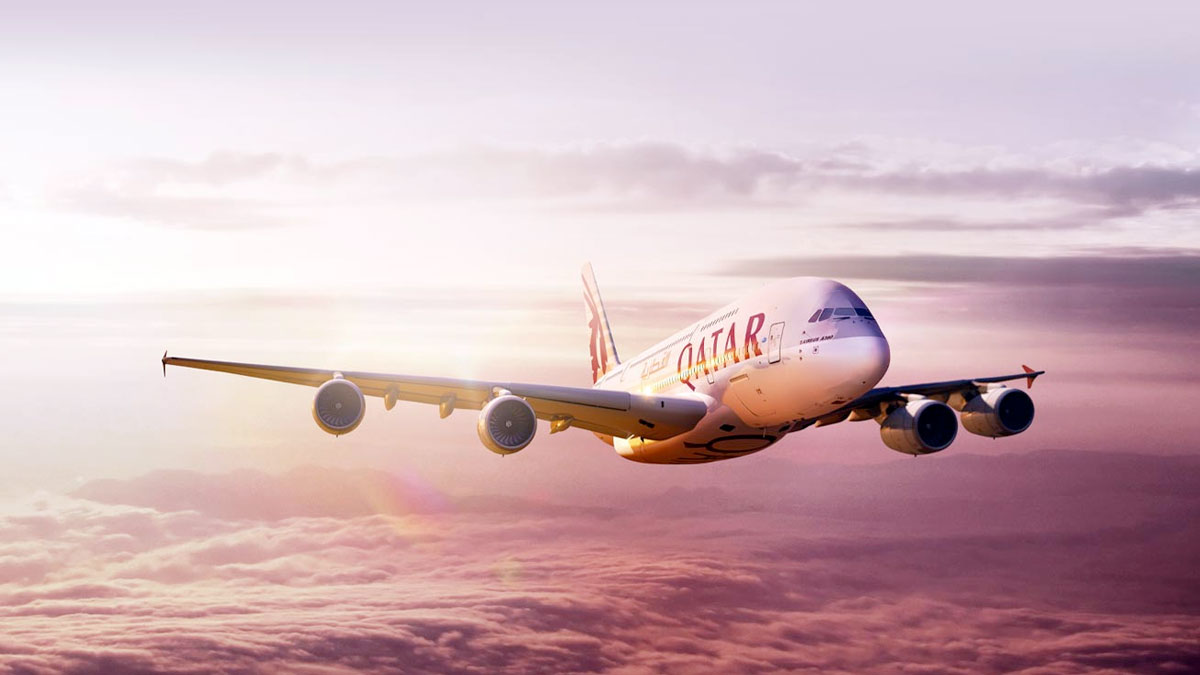
Virgin Australia no longer operates its own widebody fleet. However, its Doha flights are operated by Qatar Airways on behalf of Virgin Australia. In passenger terms, that means you may book a Virgin Australia flight number but fly on a Qatar Airways Boeing 777-300ER, with Qatar aircraft, crew and onboard product. That is not just trivia. It affects the seat, service, Wi-Fi, lounge rules and frequent flyer experience.
Which international airlines fly widebodies to Australia?
Most long-haul airlines flying to Australia use widebody aircraft because, well, Australia is a very long way from almost everywhere.
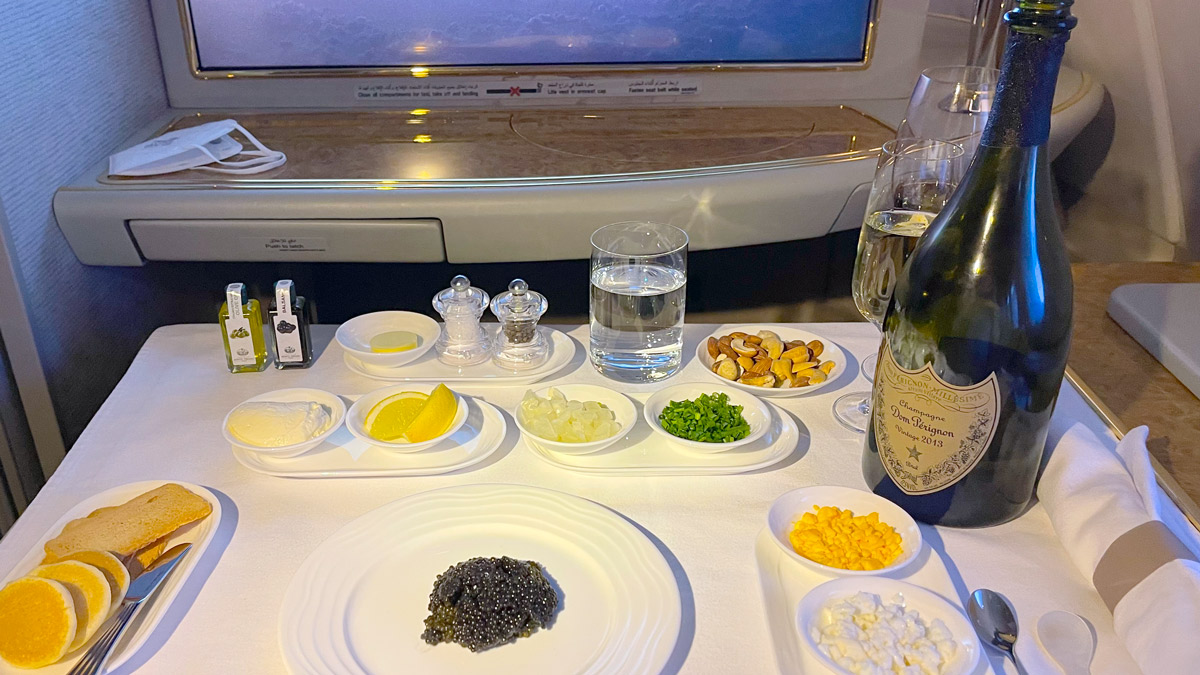
Emirates is the most visible superjumbo operator, using Airbus A380s and Boeing 777s. Singapore Airlines uses aircraft including the Airbus A350, A380, Boeing 777 and Boeing 787, depending on city and season. Qatar Airways uses a mix including Boeing 777s, Airbus A350s, Boeing 787s and, on some routes, A380s. Etihad has been moving more flying to newer Airbus A350s and Boeing 787s.
Cathay Pacific commonly uses Airbus A350s and Boeing 777s between Hong Kong and Australia. United, Air Canada and American Airlines use Boeing 787s and/or 777s on trans-Pacific services. Delta has used Airbus A350s to Australia. Air New Zealand uses narrow-body Airbus jets on shorter trans-Tasman hops and widebody Boeing 787s or 777s on longer and busier services. Fiji Airways uses both Boeing 737 MAX aircraft and Airbus A350s.
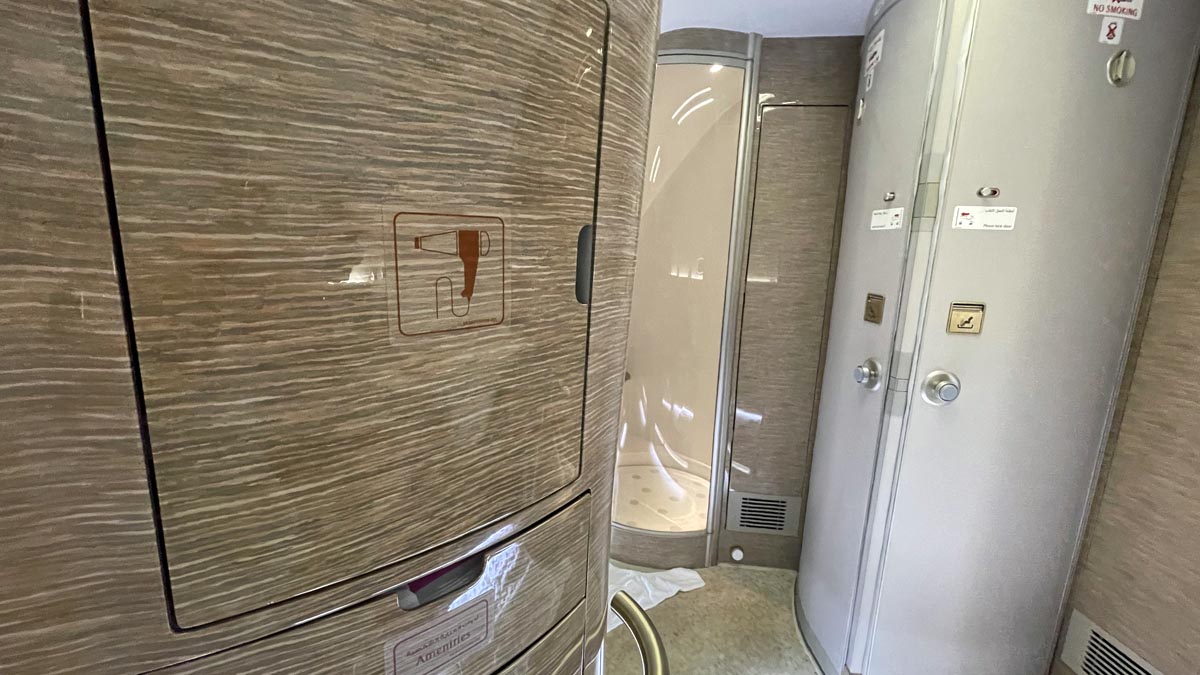
Asian carriers are just as varied. ANA and Japan Airlines use Boeing 787s and 777s. Korean Air, Asiana, Thai Airways, Malaysia Airlines, Garuda Indonesia, China Southern, China Eastern, Air India and Vietnam Airlines all use various Airbus A330/A350 and Boeing 787/777 aircraft into Australia, depending on city, season and demand.
Translation: always check the aircraft type before booking. The airline name alone does not tell you the seat, cabin, screen, Wi-Fi or Business Class experience.
![Qantas A220 range map [Qantas]](https://www.2paxfly.com/wp-content/uploads/2022/05/Airbus-A220-200_Range-Map1200-954x675.jpg)
What aircraft are Australian airlines planning next?
Qantas has the biggest fleet transformation underway. The Airbus A220 is replacing older regional jets. The Airbus A321XLR is replacing and supplementing Boeing 737s, offering enough range for longer domestic, Pacific, and Southeast Asian flights.
More interestingly, Qantas has also ordered additional A321XLRs and plans to fit some future deliveries with proper long-haul interiors from around 2028, including lie-flat business class and personal screens. That is where the A321XLR becomes more than a 737 replacement. It becomes a single-aisle aircraft that can open thinner international routes without the cost of a widebody.
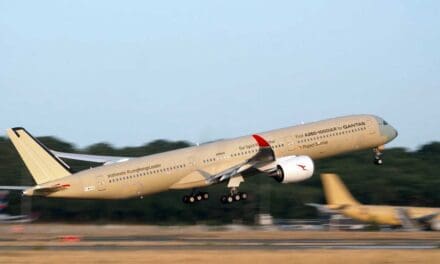
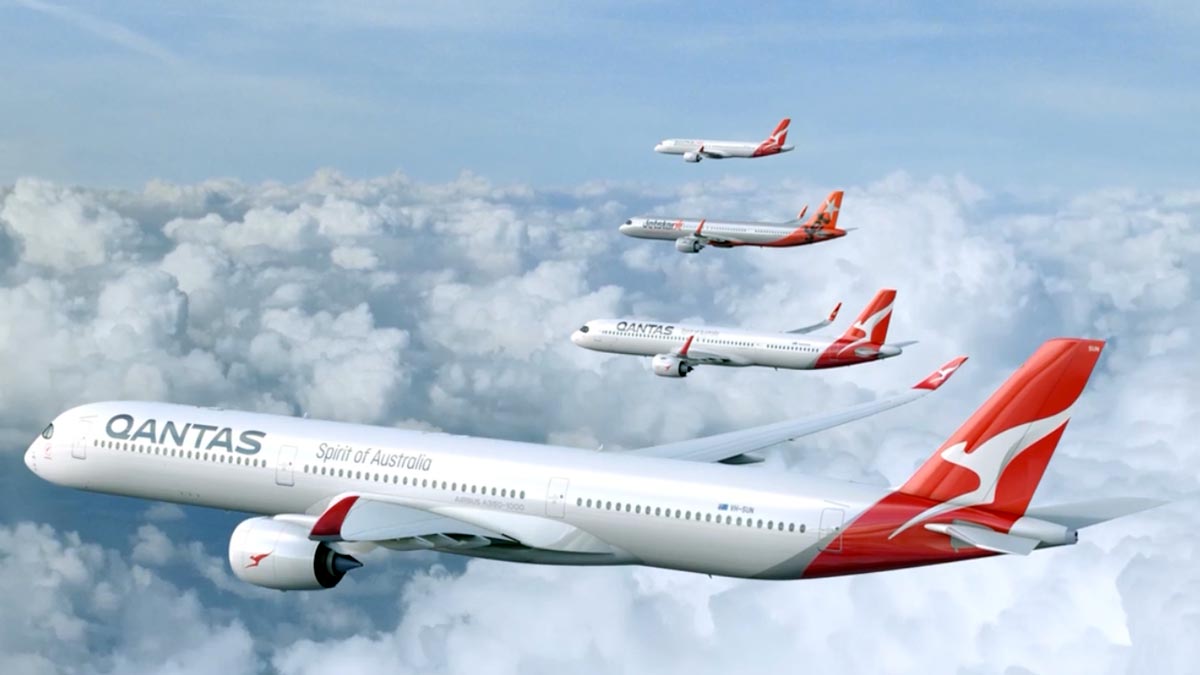
The glamour machine is the Airbus A350-1000ULR for Project Sunrise. Qantas plans to use it for non-stop Sydney–London and Sydney–New York flights, with delivery now expected in 2027. One Mile at a Time has suggested actual passenger services may not begin until later in 2027 because Qantas needs multiple aircraft before it can reliably launch a route, plus time for training and preparation.
Qantas also has more Boeing 787s coming, including 787-9s and larger 787-10s, along with additional A350s. These should progressively replace older A330s and reshape the long-haul network.
Jetstar’s future is more Airbus A321LR and A321XLR flying, alongside its Boeing 787-8s. Expect narrow-bodies to take more medium-haul leisure work, while the 787s handle longer holiday routes.
Virgin Australia’s future is still Boeing 737-shaped, with more 737-8 aircraft arriving, plus Embraer E190-E2s for regional work. Its long-haul future, for now, is tied to Qatar Airways-operated widebodies rather than Virgin buying its own big jets again.
Why travellers should care
Aircraft type is not just trivia for people who photograph tail fins at airports.
A narrow-body is perfectly fine for a short flight, but on a five-to-seven-hour sector, a single aisle, limited toilets and tight galley space can start to feel very personal. A widebody generally gives you more cabin choice, better long-haul infrastructure and a less cramped feel — although seat layout still matters.
For economy travellers, consider seat width, pitch, entertainment, and Wi-Fi. For business class travellers, aircraft type can be the difference between a recliner and a lie-flat bed. For premium economy travellers, check carefully: not every aircraft has it.
And for everyone, remember this: airlines swap aircraft. The shiny A350 you booked may be replaced by an older 777. The A321XLR may replace a 737. The A380 may appear or disappear depending on demand, maintenance, runway works, fleet shortages, or whatever the airline scheduling gods decide after lunch.
2PAXfly Takeout
Narrow-body means one aisle. Widebody means two. That is the simple version.
For Australian travellers, narrow-bodies dominate domestic flying: Qantas 737s and A321XLRs, Virgin 737s, Jetstar A320s and A321s. Widebodies dominate long-haul: Qantas A330s, A380s and 787s; Jetstar 787s; and the big international fleets of Emirates, Singapore Airlines, Qatar Airways, Cathay Pacific, Etihad and others.
The future is getting more interesting. Long-range narrow-bodies like the A321XLR will blur the old rules, taking single-aisle aircraft further than passengers might expect. Meanwhile, Qantas’ A350-1000ULR will push widebody flying to the extreme with nonstop Sydney–London and Sydney–New York flights.
So yes, aircraft type matters. Not because you need to become an aviation tragic, although we have pamphlets. But because the metal tube you choose can make the difference between “quite civilised, actually” and “never again without a sedative and an aisle seat.”








I do like the A220s and be a reason to fly QANTAS for me on those routes that get them.
Thanks for your comment Tom. I agree. I was impressed on a trip to Hobart.