



















EVACUATION: Why people still grab cabin bags and don’t ‘leave everything’
If I had a dollar for every person who does not obey the instruction to ‘leave your bags’ during an emergency evacuation of an aircraft, I’d be a rich man. This isn’t just annoying behaviour. It is dangerous because it slows evacuations. The aviation industry is now treating this as a serious safety problem. IATA, the International Air Transport Association, says it’s preparing a public campaign to tell travellers, again, to leave carry-ons behind.
So why do people still reach for the overhead bin when seconds matter?
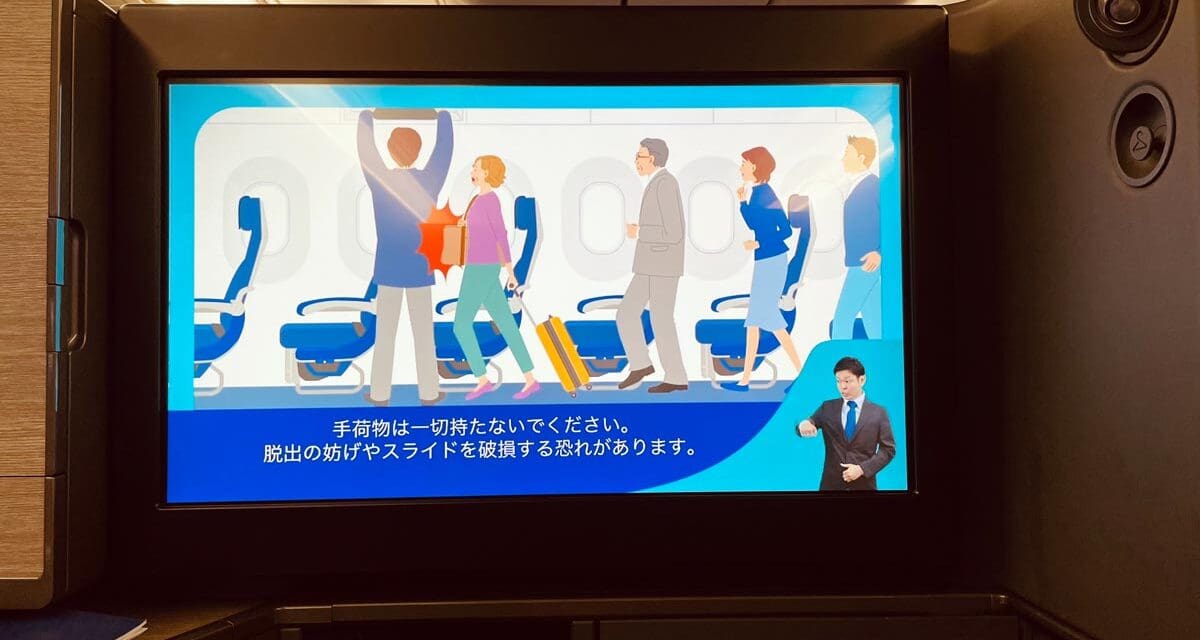
![ANA Safety Video. Your bag could rip the emergency slide! [ANA]](https://www.2paxfly.com/wp-content/uploads/2023/10/ANA-Safety-Video-2023008-1.jpg)
Current research says
A growing body of modelling and incident reviews show that luggage retrieval increases evacuation times and creates obstructions.
A 2024 FAA-commissioned simulation study focusing on narrowbody cabins tested scenarios in which 0%, 25%, 50%, and 75% of passengers attempted to retrieve their luggage during evacuation. The median evacuation time increased the more people went for their bags.
A separate FAA cabin safety literature review (2024) synthesises incident reporting, public reactions to baggage-grab videos, and modelling studies—again concluding that carry-on retrieval delays evacuation and increases risk.
This isn’t a new problem, either. A US NTSB’s (National Transport Safety Board) prospective study of 46 evacuations (1997–1999) found passengers exiting with carry-on baggage were a frequent obstruction (and that injuries and delays often stem from human behaviour, not the aircraft). (NTSB)
![ANA Safety Video. Take your high-heeled shoes off on the emergency slide! [ANA]](https://www.2paxfly.com/wp-content/uploads/2023/10/ANA-Safety-Video-2023009-1.jpg)
WTF are passengers thinking?
Of course, there is no single reason. Multiple factors, often overlapping, conspire in the cause. Here are some of them:
Normalcy bias and ‘this is just a disruption.‘
Many evacuations start with ambiguous cues (a smell of smoke, a bang, a warning to ‘stand by’). Passengers default to their aircraft departure routine. They stand up, open bins, and collect valuables. That’s named ‘normalcy bias’, treating an emergency like an inconvenience until the danger becomes undeniable. The evacuation at SFO in July 2024 (smoke from a laptop) is a classic example of a situation that passengers may interpret as not serious until it is.
Loss aversion, the bag is my whole life
Many travellers carry the most important parts of their lives in cabin baggage, including phones, passports, laptops, jewellery, and medications. The fear of losing those items can cause a powerful but irrational urge to save them. Many reviews note that people frequently try to take essentials such as wallets and medication.
People copy others
Evacuations become crowd behaviour. If the first few people grab bags, everyone behind them copies the behaviour, because it looks acceptable.
“I paid for this carry-on, I’m taking it“
As airlines tightened baggage rules and monetised carry-on and checked bags, travellers have adapted by packing more into cabin luggage. That makes the psychological pull stronger: the bag isn’t “stuff,” it’s an investment and a necessity.
Social media brain
People filming evacuations is now a documented issue in itself. If you’re filming, you’re not moving. If you’re staging your exit with your roller bag, you’re slowing everyone down. IATA has called out the trend of passengers filming and posting evacuations online.
Bags can injure
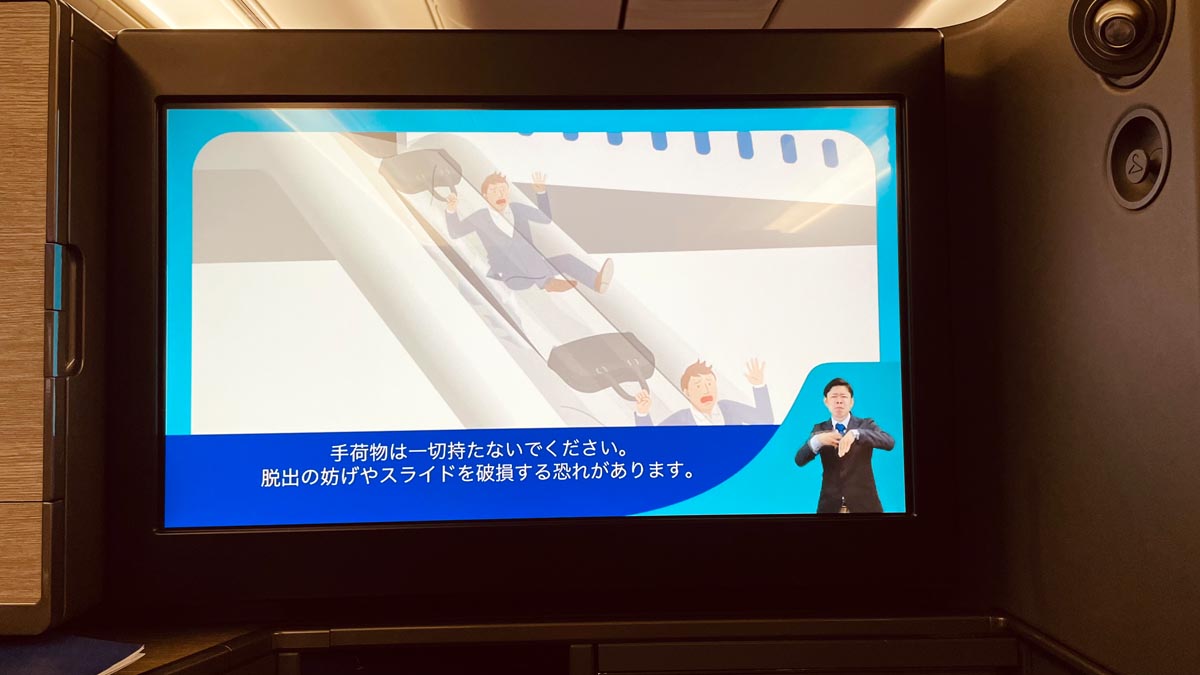
Cabin crew aren’t yelling “leave everything” because they enjoy yelling. Bags can block aisles, jam exits, and cause pile-ups at the door. Hard cases also damage evacuation slides or cause falls, especially when passengers tumble off a slide while clutching luggage.
Recent real-world examples show how common this has become:
- American Airlines at Denver (July 2025): passengers evacuated down slides after an aborted takeoff/landing gear incident; video and reporting noted people exiting with bags.
- American Airlines at San Francisco (July 2024): video captured crew repeatedly ordering passengers to leave bags as some attempted to retrieve carry-ons, reportedly delaying those behind. (People.com)
Culture can shape compliance
A 2025 paper on airline emergency preparedness in an Asian context argues that cultural factors are important and warrant greater attention in safety guidance and training. In practical terms, cultural differences may manifest as differences in willingness to follow authority, norms regarding personal space and queue discipline, and expectations about personal responsibility versus group coordination.
However, the strongest, most consistent driver remains situational. That’s the cues people receive, what other passengers do, and whether the environment feels like a true emergency.
Focus of research
There are two main areas for further investigation which it appears IATA will target: more behavioural research and policy and messaging changes.
IATA says it will also launch a public campaign urging passengers not to retrieve carry-ons during evacuations. Regulators like the FAA are also becoming more explicit with a recently issued Safety Alert for Operators warning airlines about the risk that passenger luggage retrieval delays evacuations.
2PAXfly Takeout
If you’re ever in an evacuation, your only job is to move. Shoes on if you can do it instantly. Phone only if it’s already in your hand. Everything else stays. Because the moment you stop to open the overhead bin, you’re not just gambling with your own life you’re gambling with the lives of everyone behind you.
And time is the one thing an aircraft on fire never gives back.









What did you say?