























AUSTRALIA: Airlines claim passenger protections ‘unworkable’. Surprise!
Australia’s airlines are pushing back hard against the federal government’s proposed aviation consumer protections, warning the reforms are “unworkable”, confusing, and will push up airfares. Not very imaginative arguments, and ones that every consumer protection initiative has faced.
What’s the government proposing?
The government, led by Prime Minister Anthony Albanese, wants to introduce a new Aviation Consumer Protections Charter to be legislated in the first half of 2026.
The charter, according to the circulated white paper, will set out minimum service standards airlines must meet; what passengers are entitled to when flights are delayed or cancelled and what remedies, such as meals, accommodation and rebooking, will be available to passengers when disruptions are within an airline’s control.
Those legislated standards would be enforced by a new Aviation Consumer Protection Authority, funded through an industry levy, and an independent aviation ombudsman to handle unresolved complaints.
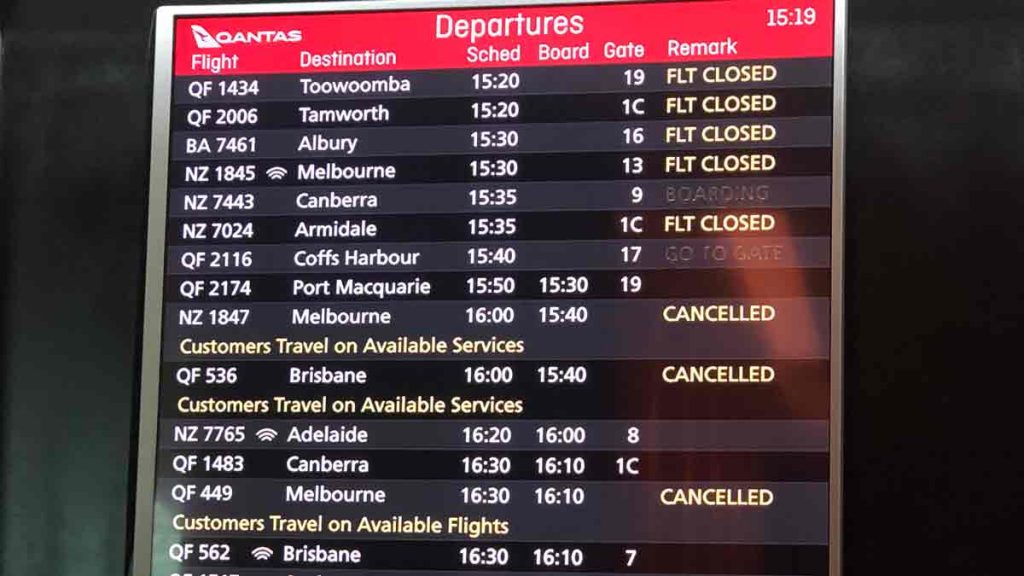
Transport Minister Catherine King says the current system isn’t working – and many travellers would agree. Airlines’ “policing themselves” hasn’t provided much comfort to passengers stranded overnight, with only a vague apology and a QR code.
Airlines say it’s a mess. Big surprise!
Airlines, represented by industry group A4ANZ, argue the reforms overlap with existing Australian Consumer Law, which is already enforced by the Australian Competition & Consumer Commission (ACCC). In a gamekeeper becomes poacher kind of bait and switch, the former ACCC chair and A4ANZ boss Graeme Samuel says the proposal creates duplicate regulation, an unnecessary new bureaucracy and extra compliance costs that will be passed on to passengers
Airlines and airline advocate groups always say that.
No fines, no sting
One major omission in the proposal is that there will be no automatic cash compensation for delays, unlike in the European Union.
Minister King has effectively ruled out fines or mandated payouts, arguing Australia’s market is too small and airlines would simply bake penalties into ticket prices.
That means travellers are likely to see vouchers instead of refunds. Think of meals instead of money. Expect accommodation only if the disruption is deemed within the airline’s control.
This will probably NOT be enough to change corporate behaviour, especially in a market dominated by just two groups, Qantas Group, which includes Jetstar and Virgin Australia.
![Virgin Australia Lounge entry, Adelaide [Schuetz/2PAXfly]](https://www.2paxfly.com/wp-content/uploads/2023/03/VA-Virgin-Australia-Adelaide-2023-IMG_1427-1200x675.jpg)
Worth supporting these changes?
Despite all of its flaws, Australian consumer advocate group CHOICE backs the reforms in principle.
Their argument is fairly straightforward. The current system is opaque, slow and exhausting. Knowing whether you’re entitled to a refund, rebooking, or hotel often requires legal-level literacy, persistence, and time most travellers don’t have.
CHOICE says a clear charter could make rebooking and refund rights explicit, stop airlines quietly rewriting conditions mid-crisis and give passengers a neutral place to escalate complaints.
That’s a pretty low bar, but it is an improvement on Australia’s current position.
For travellers
It’s a small improvement that provides some predictable outcomes including minimum standards, improved processes with airlines, and an independent place to lodge compaints that is not governed by the airlines.
However, the new system is unlikely to provide automatic compensation, a move to EU style passenger rights, or penalties that nudge airlines to improve reliability.
2PAXfly Takeout
I think this is a bit of a missed opportunity, and would far prefer that Australia adopted a scheme closer to the EU’s scheme. That is obviously a step to far at the moment for our political masters. But with the airlines saying the scheme is ‘unworkable’, and consumer advocates saying that the scheme doesn’t go far enought, maybe this is the compromise we have to live with for now.









What did you say?