



















VENEZUELA: The effect of the USA military action on aviation for Australians

The U.S. military operation in Venezuela in early January 2026 has had a direct impact on aviation in the Americas, with flow-on effects for Australian travellers transiting through the United States, the Caribbean and parts of Latin America. While Venezuela itself is not a common destination for Australians, changes to airspace, airline operations and government travel advice are relevant to anyone travelling through the region.
Australian government travel advice
The Australian Department of Foreign Affairs and Trade (DFAT) advises Australians not to travel to Venezuela. The advice cites ongoing armed conflict, violent crime, political instability and the risk of arbitrary detention. DFAT also notes that Australia has very limited consular capacity in Venezuela and that departure options can be restricted if borders or airspace close with little notice. Best to subscribe to Smartraveler updates.
Travel insurance may not cover incidents related to conflict or acts of war. Australians already in the country are advised to leave if it is safe to do so.
Airspace restrictions and flight disruption
Following the U.S. operation, the U.S. Federal Aviation Administration (FAA) imposed temporary restrictions on Venezuelan and adjacent Caribbean airspace due to safety-of-flight concerns. This led to widespread flight cancellations, particularly by U.S. airlines serving Puerto Rico, the U.S. Virgin Islands and other Caribbean destinations. Hundreds of flights were cancelled over several days.
Although the most severe restrictions have been lifted, regulators in the U.S. and Europe continue to warn airlines against operating in or over Venezuelan airspace. As a result, many international carriers continue to avoid the region, resulting in longer routings and ongoing network disruptions.
For Australian travellers, this matters because many itineraries to the Caribbean, Central America and northern South America route through U.S. hubs such as Miami, Houston, Atlanta or New York. Disruptions in those hubs can cascade into missed connections, rebookings and longer travel times.
Which airlines are still flying to and from Venezuela
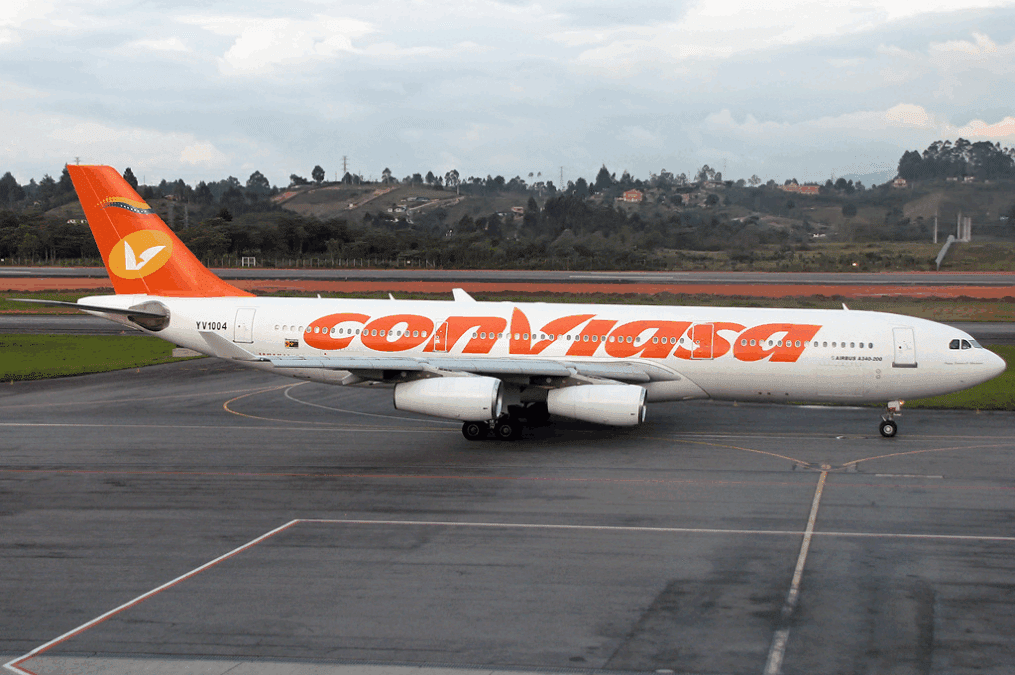
International connectivity to Venezuela has been sharply reduced. Most major foreign airlines suspended services in late 2025 and subsequently lost their operating rights. As of early 2026, only a small group of airlines are operating scheduled passenger flights.
The most significant is Conviasa (you may get a security warning if you follow this link), Venezuela’s state-owned airline. Conviasa remains the primary long-haul operator from Caracas and continues to fly international services from Simón Bolívar International Airport. Its active network includes flights from Caracas to Mexico City, Havana and Varadero (Cuba), Moscow and Saint Petersburg (Russia), and Tehran (Iran). These routes make Conviasa one of the few airlines maintaining intercontinental passenger services from Venezuela.
Several Venezuelan private carriers are also operating on a more limited scale. Avior Airlines and Laser Airlines continue to fly regional international routes, primarily to destinations such as Panama and Curaçao, alongside domestic services. These airlines provide basic regional connectivity but do not operate long-haul services comparable to Conviasa.
Among foreign airlines, Copa Airlines and its low-cost subsidiary Wingo continue to operate flights between Panama City and Venezuela, maintaining one of the few remaining links between Venezuela and a major international hub.
This information is current as far as I can tell as of today (Monday 5 January 2026) but is subject to change as the situation develops.

Practical implications for Australian travellers
For Australians travelling through the Americas in 2026:
- Expect longer routings and potential delays on flights that previously overflew Venezuelan airspace.
- Monitor itineraries to or from the Caribbean or northern South America, particularly when transiting U.S. hubs.
- Avoid planning travel to Venezuela itself, in line with DFAT advice.
- Check travel insurance carefully, as many policies exclude coverage related to war or armed conflict.
Even travellers with no intention of visiting Venezuela may be affected by network disruptions and aircraft redeployments across the region.
What happens if the situation stabilises?
If Venezuela enters a sustained period of political and security stability, international aviation could gradually reopen. That would require regulators such as the FAA and EASA (European Union Aviation Safety Agency) to lift airspace warnings and for airlines to regain confidence in safety oversight and ground infrastructure.
In that scenario, foreign carriers could eventually resume services, and Conviasa could expand its international network. However, any recovery in airline connectivity is likely to be slow and measured, and is unlikely to materially change travel conditions in 2026.
2PAXfly Takeout
Maybe its the journalist, or sticky beak in me that instantly, as soon as the conflict began, want to visit Venezuala. The practicalities of that, not to mention the safety are adversely impacted by the USA’s recent military action in extracting the Venezualan Prime Minister and his wife.
This U.S. military action in Venezuela has significantly reduced the country’s air connectivity and disrupted aviation across parts of the Caribbean and the Americas. For Australian travellers, the effects will be indirect but real. You can expect altered routings, disrupted connections and heightened travel risk in the region.
Conviasa remains the main airline operating long-haul international services from Venezuela, but DFAT’s advice is clear — Venezuela remains a destination Australians should avoid, and travellers transiting nearby should plan with flexibility.








What did you say?